
Research
Equity research straight from the filings — one public company per report, every figure traceable to an SEC filing. No hype, no price targets.
Aehr Test Systems (AEHR) FY2026 10-K Analysis: Semiconductor Test Backlog Up 430%
Aehr Test Systems reported record net income in fiscal 2024 on far less operating income. The gap was a $21.9M valuation allowance release. Two years later revenue is down 24.5% from peak, gross margin has lost 14 points, and the order book has grown 430%. Both readings come from the same 10-K.

Applied Digital (APLD) FY2026 10-K: $36.2B Contracted Lease Book vs a $236M Operating Loss
Applied Digital (APLD) reported $611.3 million of revenue and a $236.5 million operating loss for fiscal 2026, while carrying 1,410 MW of contracted data center capacity worth roughly $36.2 billion. We reconcile the loss line by line from the 10-K: $220.1 million of stock compensation, $2.78 billion of construction in progress that has never been switched on, and two operating segments that both made money.

Core Scientific (CORZ) Q2 FY2026: Bitcoin Miner to AI Data Center Pivot Explained
Core Scientific (CORZ) reported a $1.155 billion net loss on $164 million of revenue for the quarter ended June 30, 2026, while gross margin went from 6.4% to 42.7%. We reconcile the two using the filing itself: the bitcoin-miner-to-AI-datacenter pivot, the CoreWeave concentration, and the one non-cash warrant line that explains 90% of the loss.
How a Company Books Record Revenue and Still Burns Cash: Champions Oncology CSBR FY2026 10-K
Champions Oncology's FY2026 10-K: record revenue of $59.425M, an operating loss of $1.140M, and an $11.858M swing in operating cash flow. Where the money went, line by line, from the filing.

Enphase Energy (ENPH) Q2 FY2026 Earnings: 60% Gross Margin on 20% Less Revenue
Enphase Energy's Q2 FY2026 10-Q reports revenue down 19.6%, gross profit up 2.7%, operating income up 39.2% and net income flat. Two items inside cost of revenue explain the 60% gross margin: $64.9M of Section 45X credits and $45.4M of refunded import tariffs. Strip both and margin is 22.2%.
JetBlue Q2 2026 Earnings Breakdown: Revenue +14.5%, $141M Operating Loss (JBLU 10-Q)
JetBlue grew revenue 14.5% to $2,697M in Q2 2026 and posted a $141M operating loss. Ranking the nine operating expense lines by dollar increase shows aircraft fuel is 83% of the entire cost increase. Every figure from the 10-Q filed July 28, 2026.
American Whiskey Oversupply: MGP Ingredients MGPI Q2 2026 Earnings, $321M Goodwill Gone
MGP Ingredients wrote its entire goodwill balance to zero in the first quarter of 2026, the third write-down in three straight years. But the segment that got written off is not the segment that collapsed, and the whiskey piling up in the warehouse turns out to be a decision rather than a symptom. Every figure from the Q2 2026 10-Q.
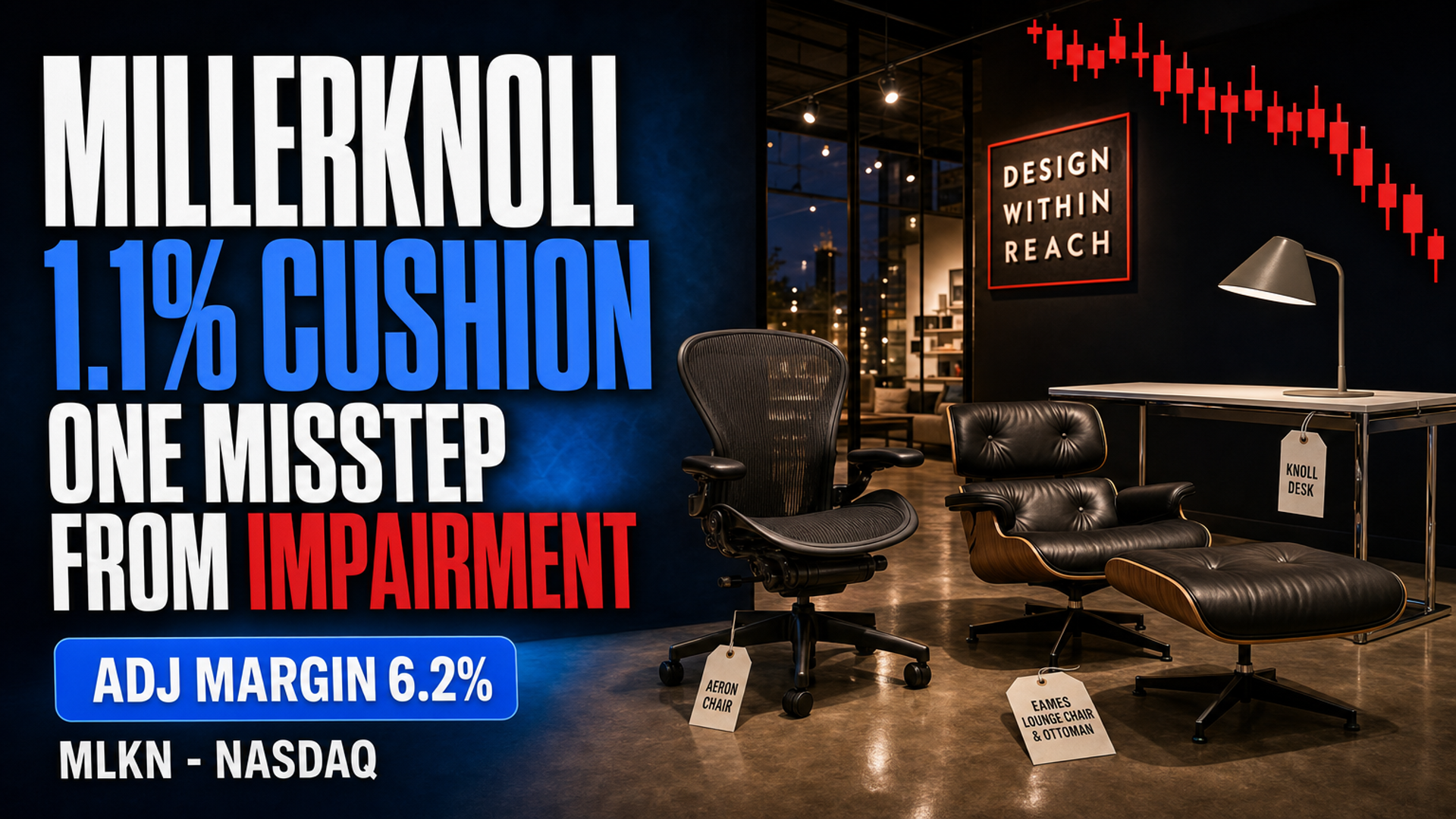
Goodwill Impairment Explained: How a Write-Down Flatters Next Year's Growth (MillerKnoll FY26)
MillerKnoll's FY2026 10-K: operating income up 293% to $198.3M, but the company's own adjusted operating income fell for a second straight year, and the goodwill test disclosed a 1.1% cushion on Global Retail. What the write-down base effect hides, straight from the filing.
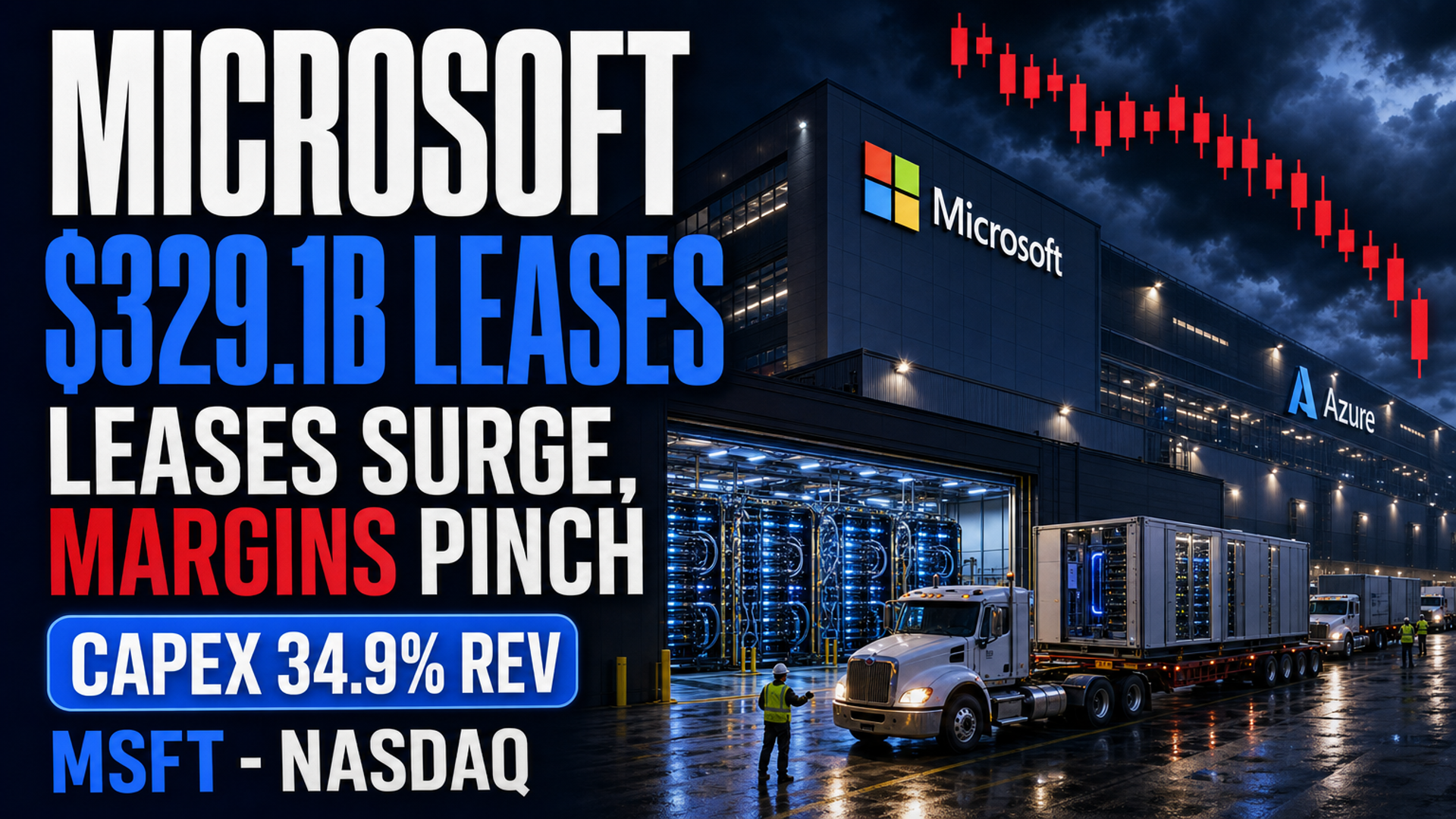
Microsoft MSFT FY2026 10-K: $115.9B Capex, Azure Up 41%, Free Cash Flow Fell Again
Microsoft's FY2026 10-K: $115.9B of capex, $329.1B of datacenter leases not yet commenced, free cash flow down for a second year, and the $678B backlog behind it.
+1 prior report

Starbucks SBUX Q3 FY2026 Earnings: Revenue Down 1.4%, Profit Up 87% - The China Sale Explained
Starbucks reported an 87.2% jump in net earnings on a 1.4% revenue decline for the quarter ended June 28, 2026. Both numbers are the same transaction: the March 30 sale of a 60% interest in its China retail operations, which produced a $536.3M pre-tax gain and removed $776M of company-operated revenue. Underneath, global comparable store sales rose 7.9%. Every figure comes from the Q3 FY2026 Form 10-Q.
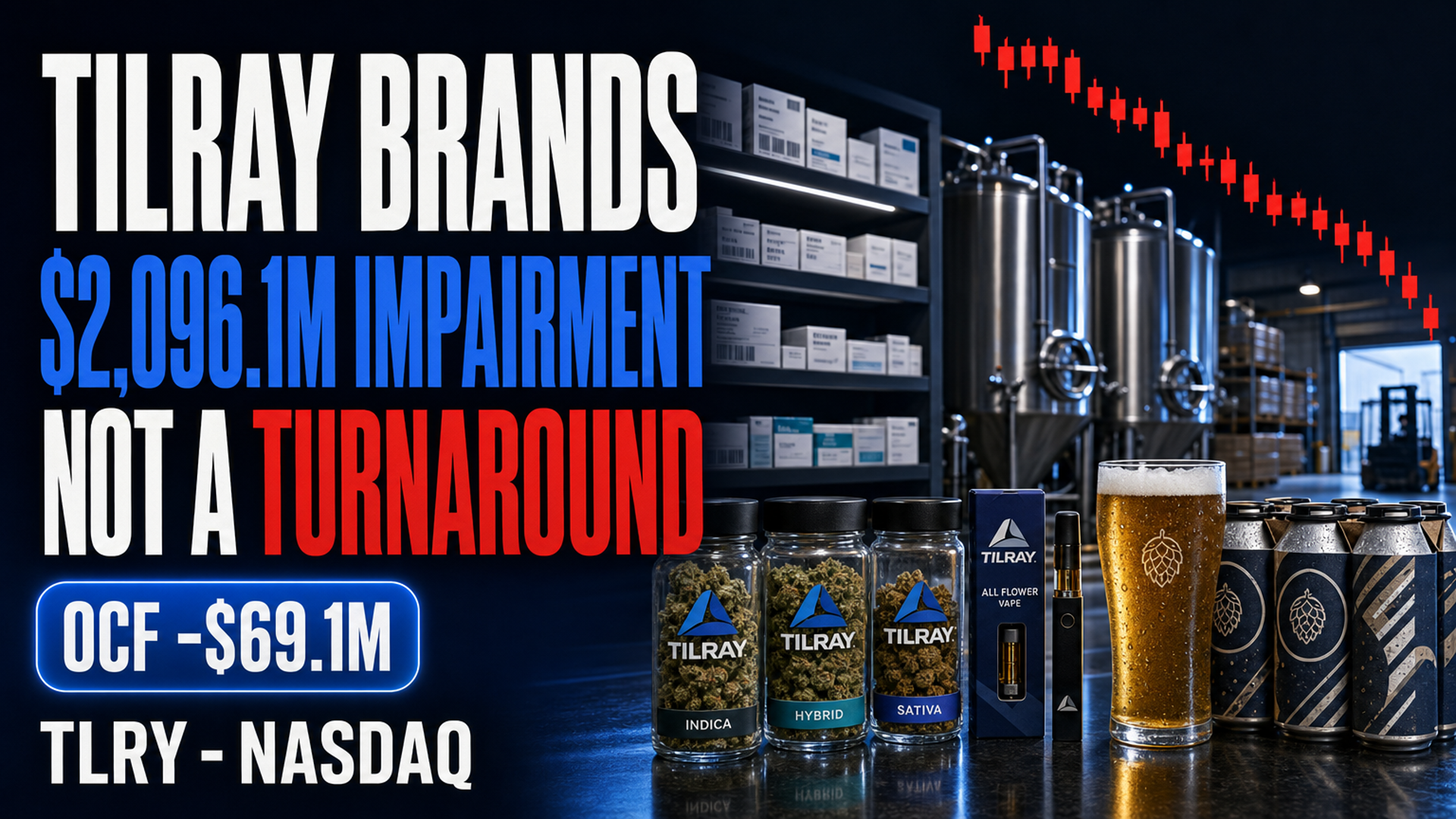
Tilray (TLRY) FY2026 Earnings: The $2.1B Impairment Behind a 95% Smaller Loss
Tilray Brands cut its net loss by $2.08 billion in fiscal 2026. This walkthrough of the FY2026 Form 10-K shows that 94.4% of the improvement is one impairment charge not repeating, that the growth came from the lowest-margin segment, and that $752.4M of surviving cannabis goodwill rests on a 34% five-year growth assumption. Every figure is pulled from the filing's XBRL.

How an Investment Research Publisher Actually Makes Money: Value Line (VALU) FY2026 10-K
Value Line's FY2026 10-K shows the publishing business producing 13.7% of pre-tax income. The rest comes from a non-voting interest in the asset manager it deconsolidated in 2010 and from a securities portfolio.

AAR Corp (AIR) FY2026 10-K: Net Income Up 15x on 19% Revenue Growth
AAR Corp (AIR) FY2026 10-K analysis: net income rose from 12.5 million dollars to 187.7 million on 19.0 percent revenue growth. The full bridge shows only 43 million of the 207 million dollar pretax increase came from the operating segments.
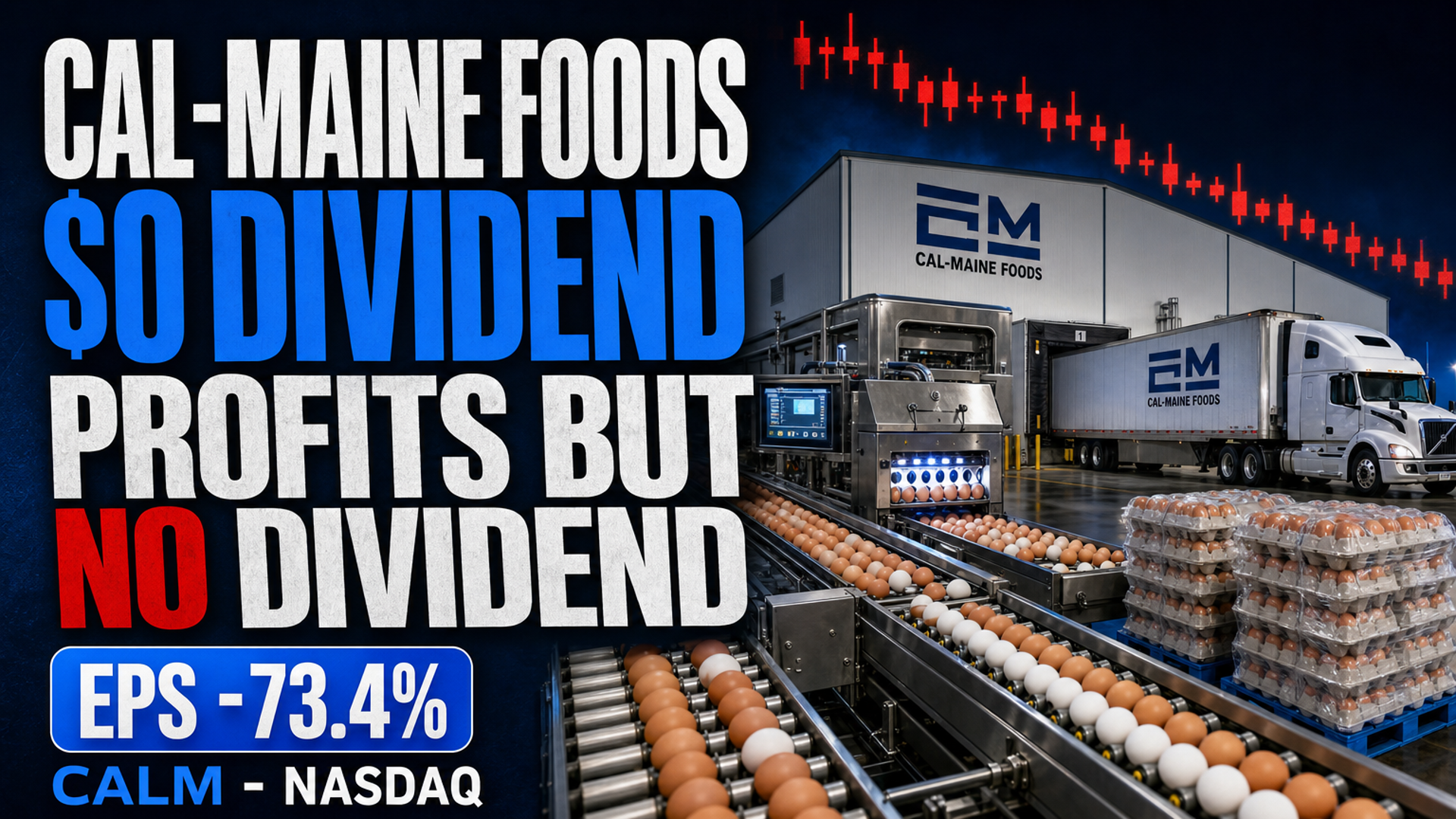
Cal-Maine Foods CALM FY2026 10-K: Revenue -31.7%, Q4 Net Loss, No Q4 Dividend
Cal-Maine Foods (CALM) FY2026 10-K analysis: revenue down 31.7 percent, a Q4 net loss of $35.9M, and the variable dividend switched off. Every figure traced to the filing.

Calix (CALX) Q2 2026 Earnings: Operating Income $391K to $21.8M, Gross Margin Falls
Calix operating income went from $391K to $21.8M year over year. We trace the swing through the Q2 2026 10-Q and find that roughly 40% of it came from lower stock compensation, while gross margin fell on an AI-driven memory cost shock.

GrafTech (EAF) Q2 2026 Earnings: Negative Gross Profit, $1.2B Debt
A line-by-line read of GrafTech International's Q2 2026 10-Q: gross profit of negative $0.4M on $127.4M of revenue, $24.4M of interest expense, and exactly what the filing says about debt, liquidity and covenants.

Enova International (ENVA) Q2 2026 Earnings: Record Profit, Rising Small Business Delinquency
Enova International (ENVA) posted record Q2 2026 profits with net income up 38 percent. Its charge-off ratio fell while its delinquency rate rose. The 10-Q shows why, and it is not the consumer.
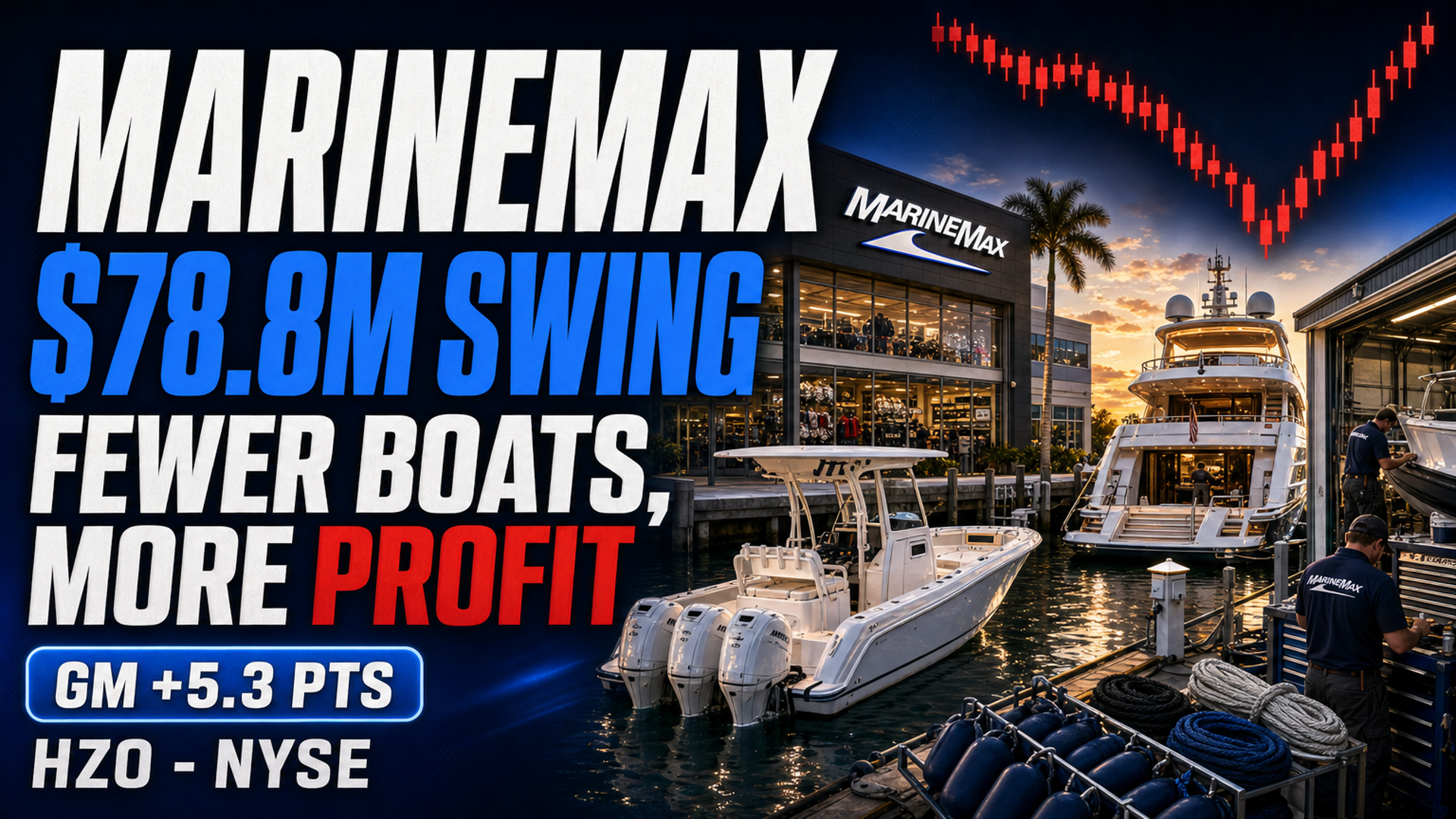
MarineMax (HZO) Q3 FY26 Earnings: $52M Loss to $15M Profit, How Much Was the Writedown?
MarineMax swung from a $52.1M quarterly loss to $15.4M of net income. We separate the $69.1M goodwill impairment from the $9.7M of real operating improvement, using the Q3 FY2026 10-Q.

Immersion (IMMR) FY2026 10-K: $1.73B Revenue but EPS Fell 92.6% to $0.14
Immersion Corporation (IMMR) FY2026 10-K analysis: revenue rose 11.2 percent to 1.73 billion dollars while diluted EPS fell 92.6 percent to 14 cents, because Immersion consolidates Barnes & Noble Education while owning only 32.6 percent of it.

Iridium (IRDM) Q2 2026 Earnings: Net Income Down 56% While Revenue Grew | Rocket Lab Merger
Iridium Communications (IRDM) Q2 2026 10-Q analysis: net income fell 55.9 percent to 9.7 million dollars while revenue rose 3.8 percent. The entire decline sits in SG&A, driven by 14.3 million dollars of Rocket Lab merger and Aireon transaction costs.
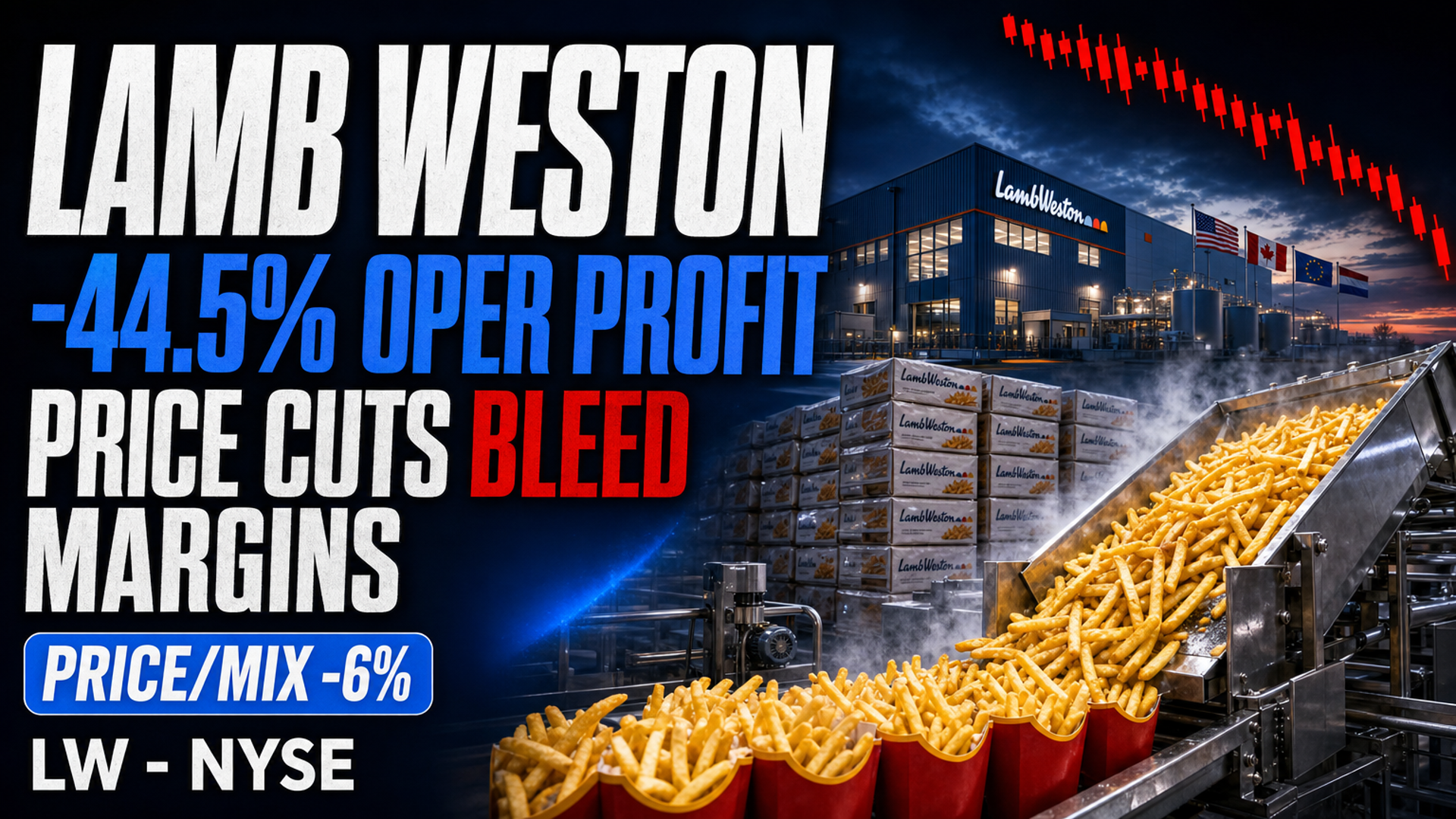
Lamb Weston (LW) FY2026 10-K: Volume Up 7%, Price/Mix Down 6%, Margin Nearly Halved
Lamb Weston Holdings (LW) FY2026 10-K analysis: sales volume rose 7 percent while price/mix fell 6 percent, taking operating margin from 16.5 percent to 8.9 percent in two years. The margin did not go to cost inflation.

MaxLinear (MXL) Q2 2026 Earnings Analysis: First Profit in 3 Years, Revenue Up 55%
MaxLinear posted $1.8M of net income in Q2 2026 while its operations lost $4.2M. We trace exactly where the profit came from, and find a much better story underneath it.

Scholastic SCHL FY2026 Earnings: The $99.7M Headquarters Sale Behind a $56.7M Profit
Scholastic Corporation (SCHL) FY2026 10-K analysis: net income of $56.7 million on a $99.7 million sale-leaseback gain, while operating income held flat at $15.2 million on a 1.0 percent margin.

AMC Stock Analysis: Q2 2026 Earnings, Operating Income Up 157% and Still a Loss
AMC Entertainment Q2 2026 10-Q analysis: operating income rose 157 percent to 238 million dollars, and the company still reported a net loss because non-operating costs ran 246 million.
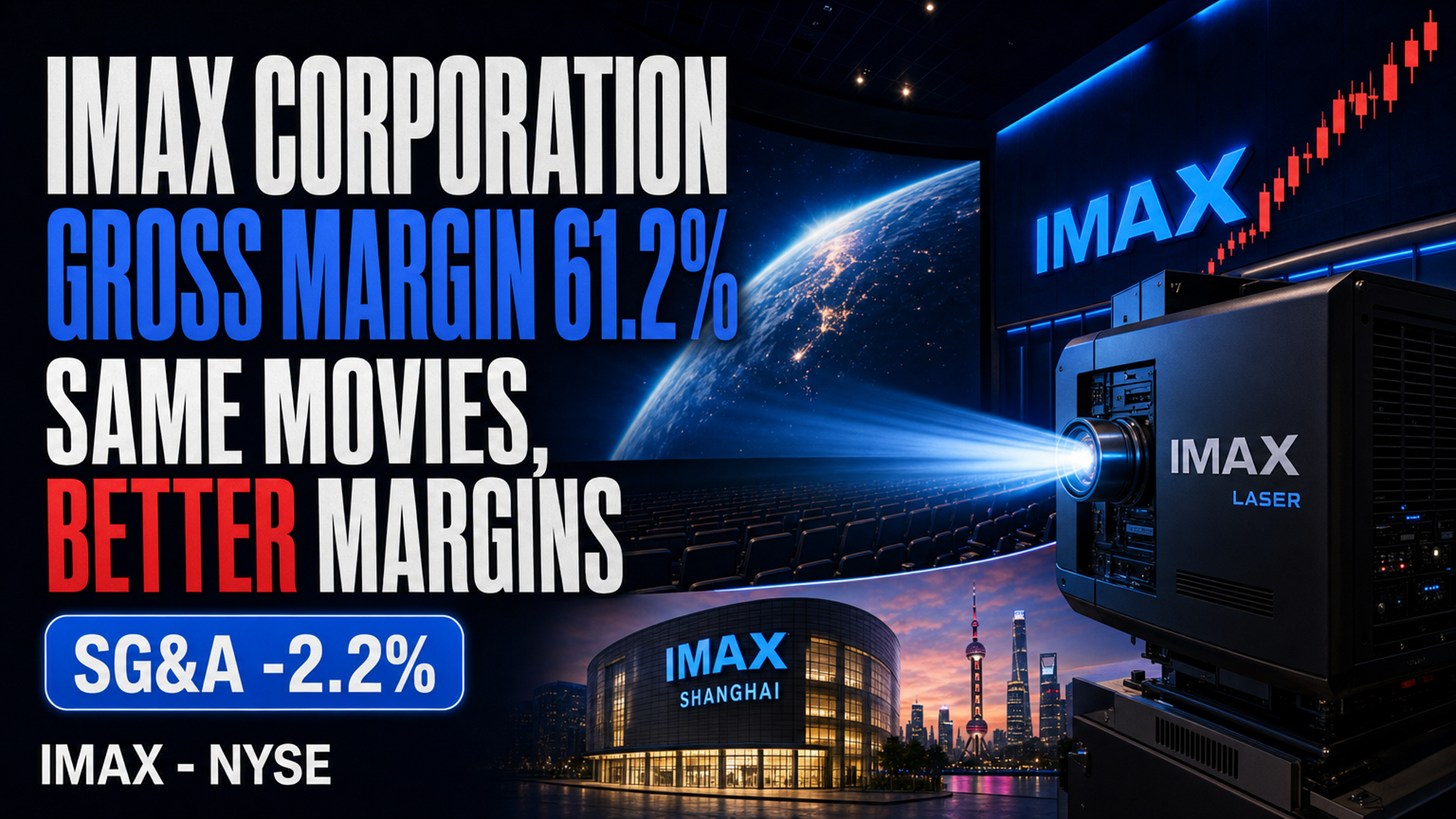
IMAX Stock Analysis: Q2 2026 Earnings, Revenue Up 12% While Overhead Fell
IMAX Corporation (IMAX) Q2 2026 10-Q analysis: revenue rose 12.2 percent to 102.8 million dollars while SG&A fell, lifting net income 36.8 percent on a 61 percent gross margin.

RGP Stock Analysis: Resources Connection FY2026 10-K, Revenue Down 18 Percent
Resources Connection (RGP) FY2026 10-K analysis: revenue down 18 percent to 452 million dollars, and management names AI adoption as the cause of falling billable hours.
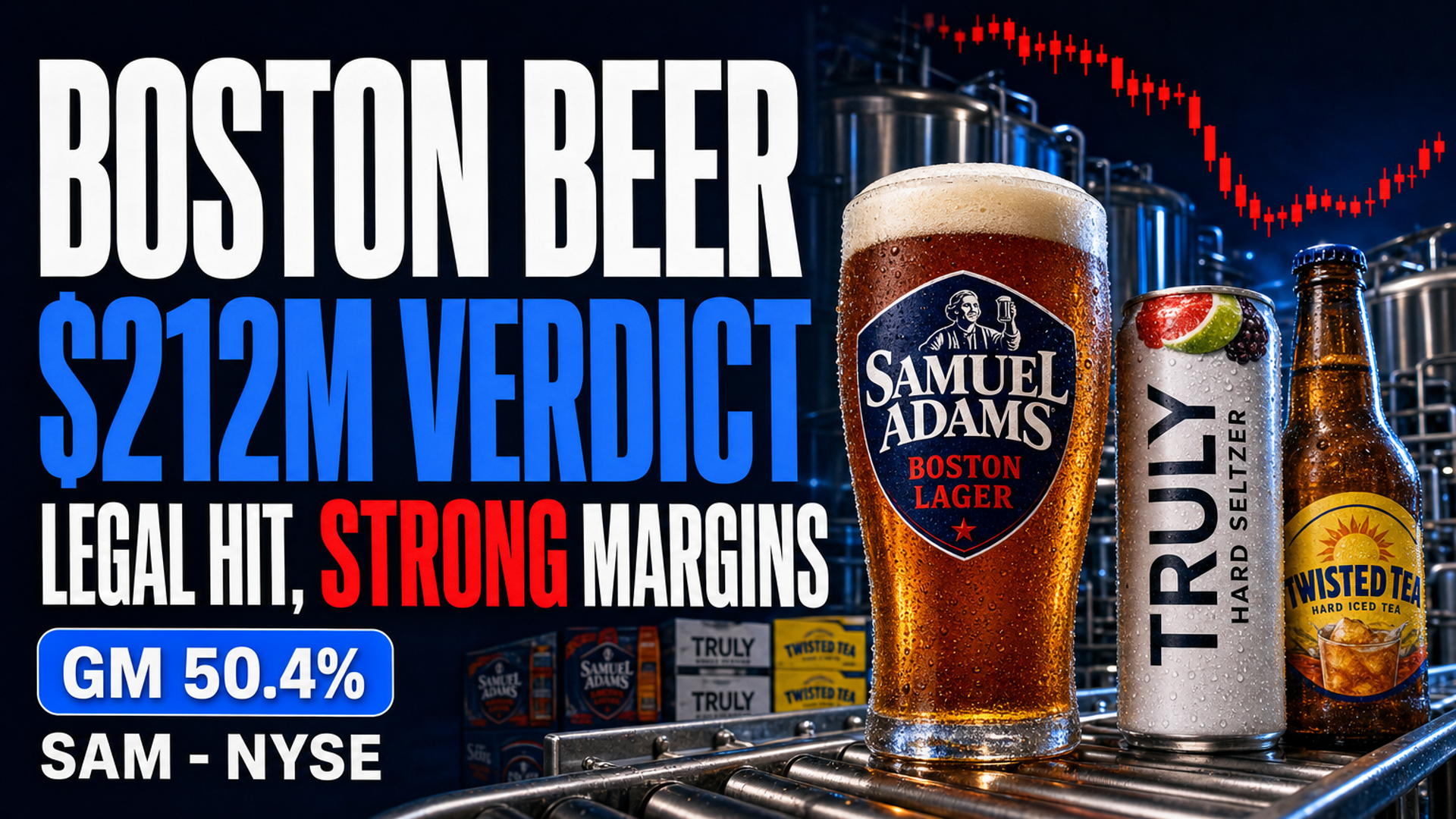
Boston Beer SAM Q2 2026 Earnings: The $212M Verdict Behind the Q1 Loss
Boston Beer (SAM) Q2 2026 10-Q analysis: a 175.5 million dollar litigation charge plus 36.5 million of interest caused the Q1 loss, while the beer business kept a 50 percent gross margin.
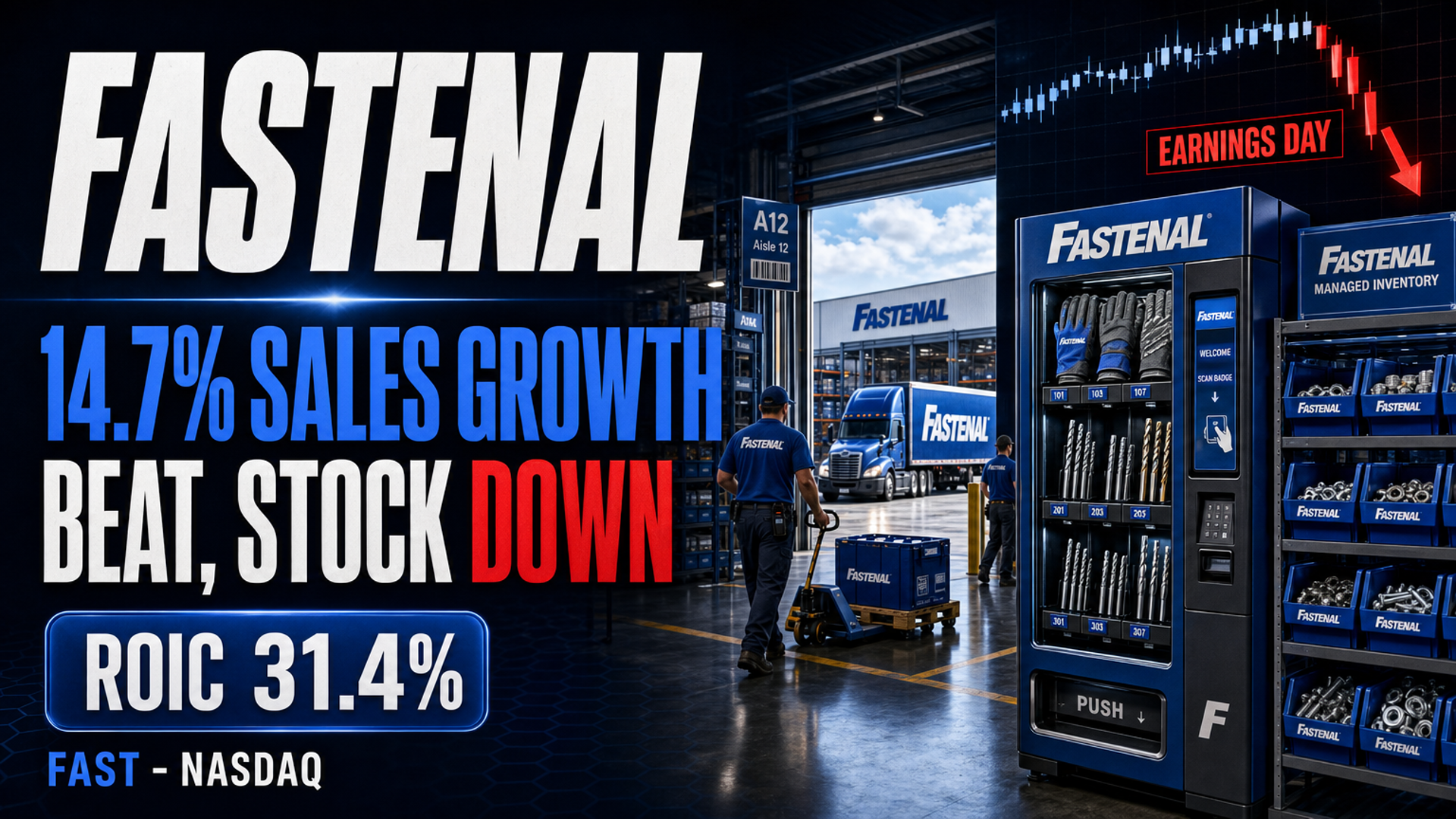
Fastenal: A Double-Digit Comeback the Market Sold (FAST Q2 2026)
Fastenal reaccelerated to 14.7% sales growth in Q2 2026 - and the stock fell. We break down the beat, the margin squeeze, and what the numbers say about a ~39x multiple. Data from the SEC 10-Q via RoboSystems. Not investment advice.
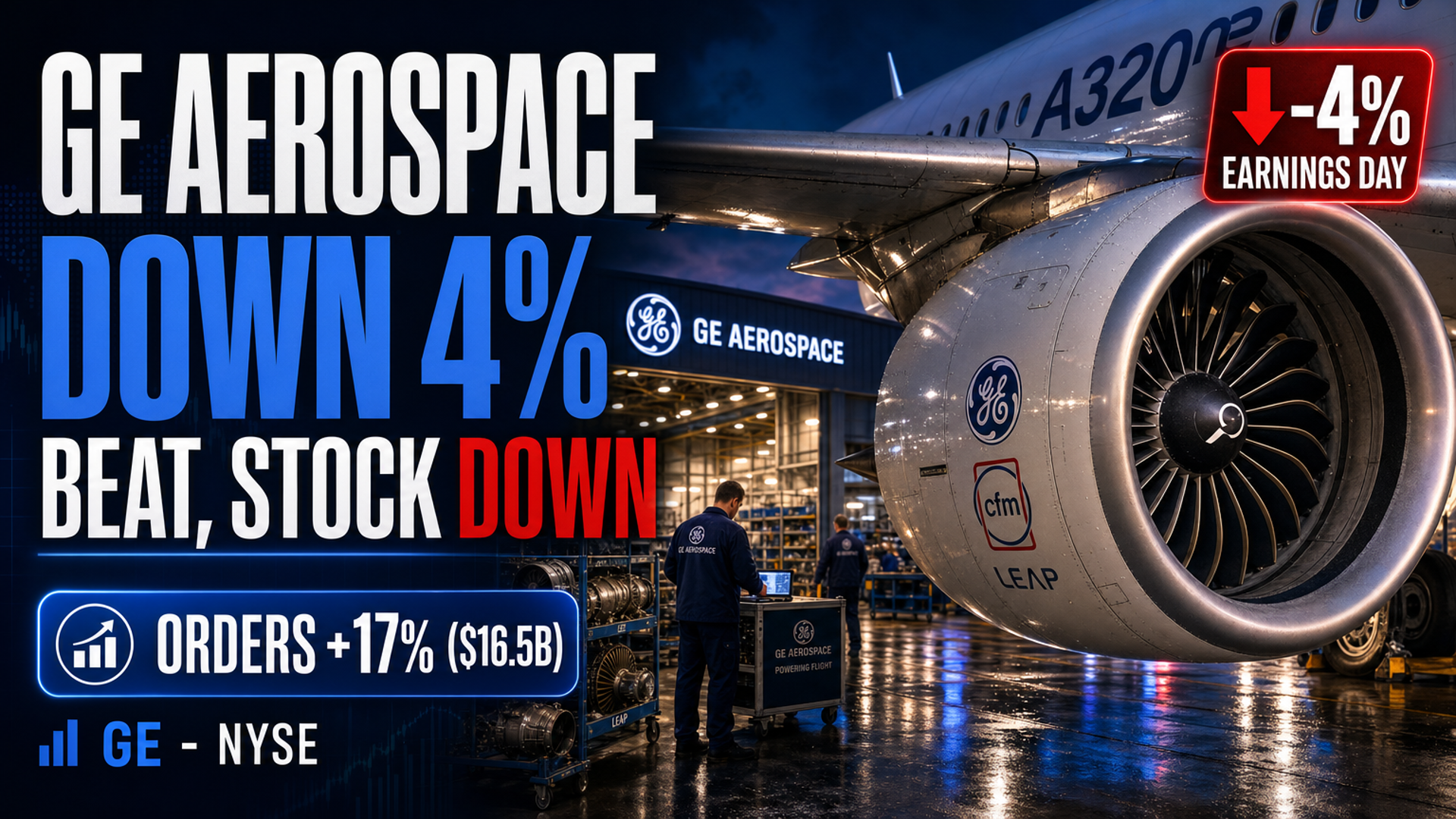
GE Aerospace Beat Everything and Still Fell 4% - What a 45x Multiple Really Buys You
GE Aerospace beat on every line, raised FY2026 guidance across the board, and still fell 4% - because order growth decelerated from +87% to +17%. We verify the Q2 2026 10-Q numbers in the RoboSystems SEC filing graph and run a scenario DCF to show what a $362B valuation already assumes.

Netflix Beat Earnings - So Why Did It Crash to a 52-Week Low? (NFLX Deep Dive)
Netflix grew revenue 13.4%, posted a 33.4% operating margin, and bought back a record $4.7B of stock - and the market sold it to a fresh 52-week low. We verify the Q2 2026 10-Q data, decode the 10-for-1 stock split, and run a bull/base/bear DCF on what Netflix is worth now.

Paychex Grew 17% - Then Told You Not to Expect It Again (PAYX)
Paychex posted record fiscal 2026 revenue of $6.5B, up 17%, but nearly all of it was the Paycor acquisition. We break down the GAAP-vs-adjusted earnings gap, the organic re-acceleration hiding under the headline, the cash machine, and what the business is worth. Not investment advice.

Travelers: Flat Premiums, But Earnings Up 57% - Here's the Catch
Travelers' Q2 2026 revenue was flat, yet earnings per share jumped 57%. We break down the catastrophe swing, the buybacks, and what the stock is worth near a record high - all from the SEC filing.
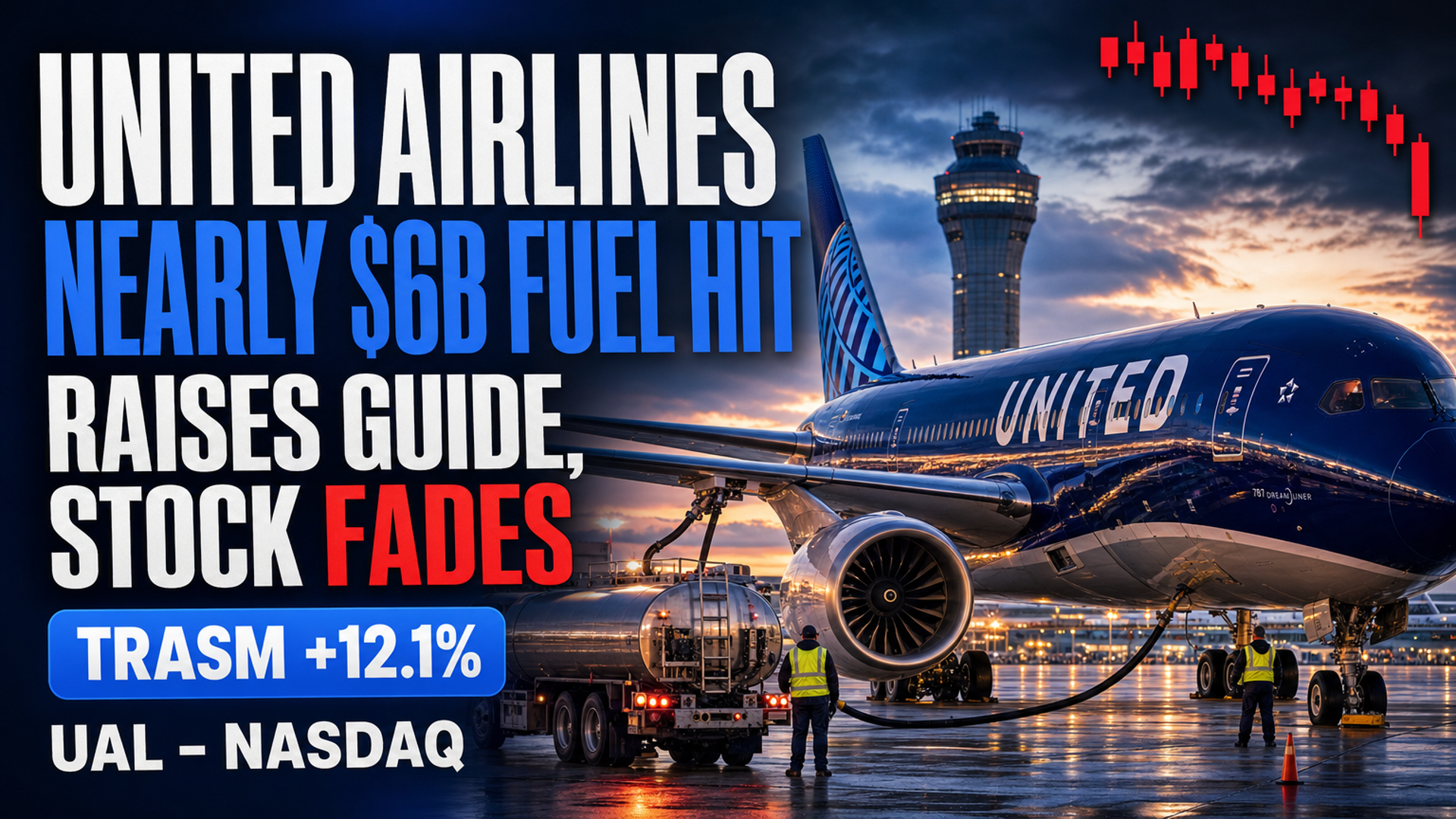
United's Record Quarter Hid a $6 Billion Problem | UAL Q2 2026 Deep Dive
United Airlines just posted record Q2 2026 revenue of $17.7B (+16%) - and earned 17% LESS. We break down the fuel shock, the raised guidance, and what UAL is worth, straight from the SEC filings.
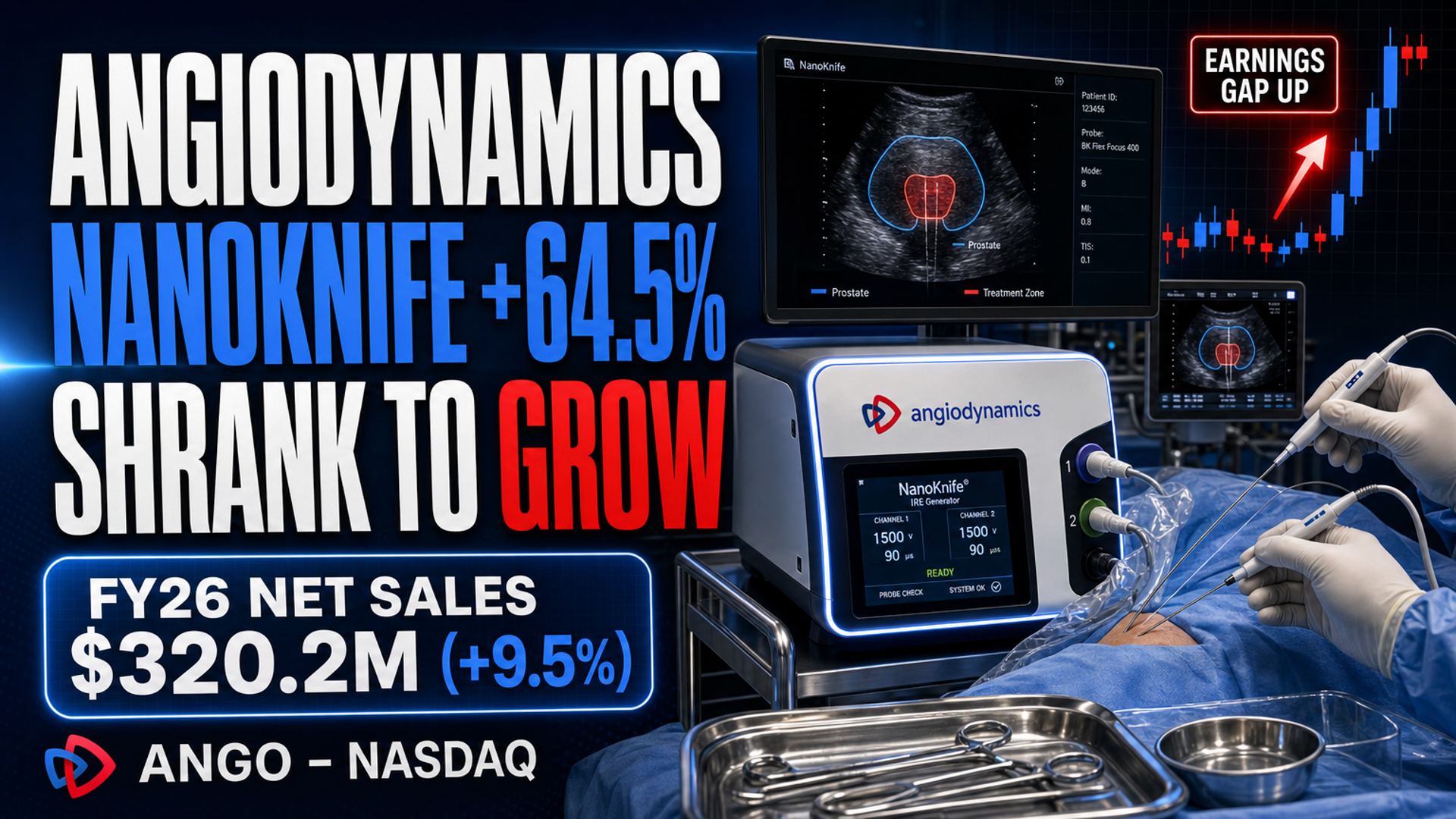
AngioDynamics Shrank On Purpose - Then Grew 9.5% | ANGO 10-K Deep Dive
AngioDynamics (ANGO) sold off its slow businesses and re-accelerated: FY2026 revenue up 9.5% to $320M, Med Tech up 18.4%, NanoKnife up 64.5% in Q4 on new Medicare coverage. Full 10-K breakdown, valuation scenarios, and the GAAP reality check.
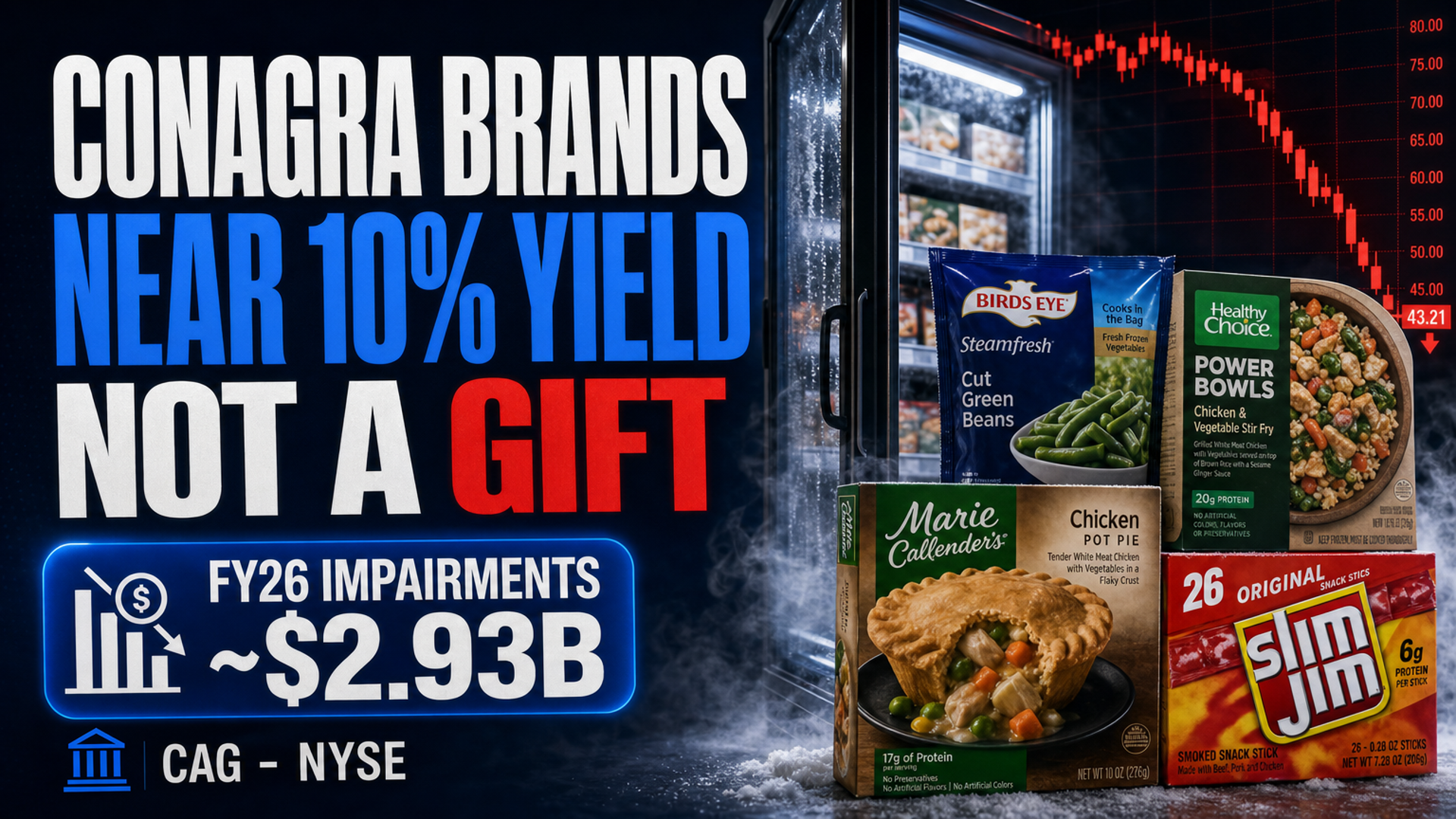
Conagra Just Cut Its Dividend in Half. The 10-K Explains Why.
Conagra Brands (CAG) wrote off $2.9 billion, cut its dividend 50%, and guided FY27 earnings down another 16%. We go inside the FY2026 10-K - straight from the SEC's XBRL data - to see whether the $14 stock is a value trap or a leveraged turnaround.

Taxed on Losses: The $239M Bet Inside Cresco Labs (CRLBF)
Cresco Labs lost $253M over three years and was still charged $127M in income tax under Section 280E. Its disputed tax IOU now equals 60% of its market cap - and the DEA hearing to reschedule all marijuana just concluded. We pull the real numbers from the SEC filings.
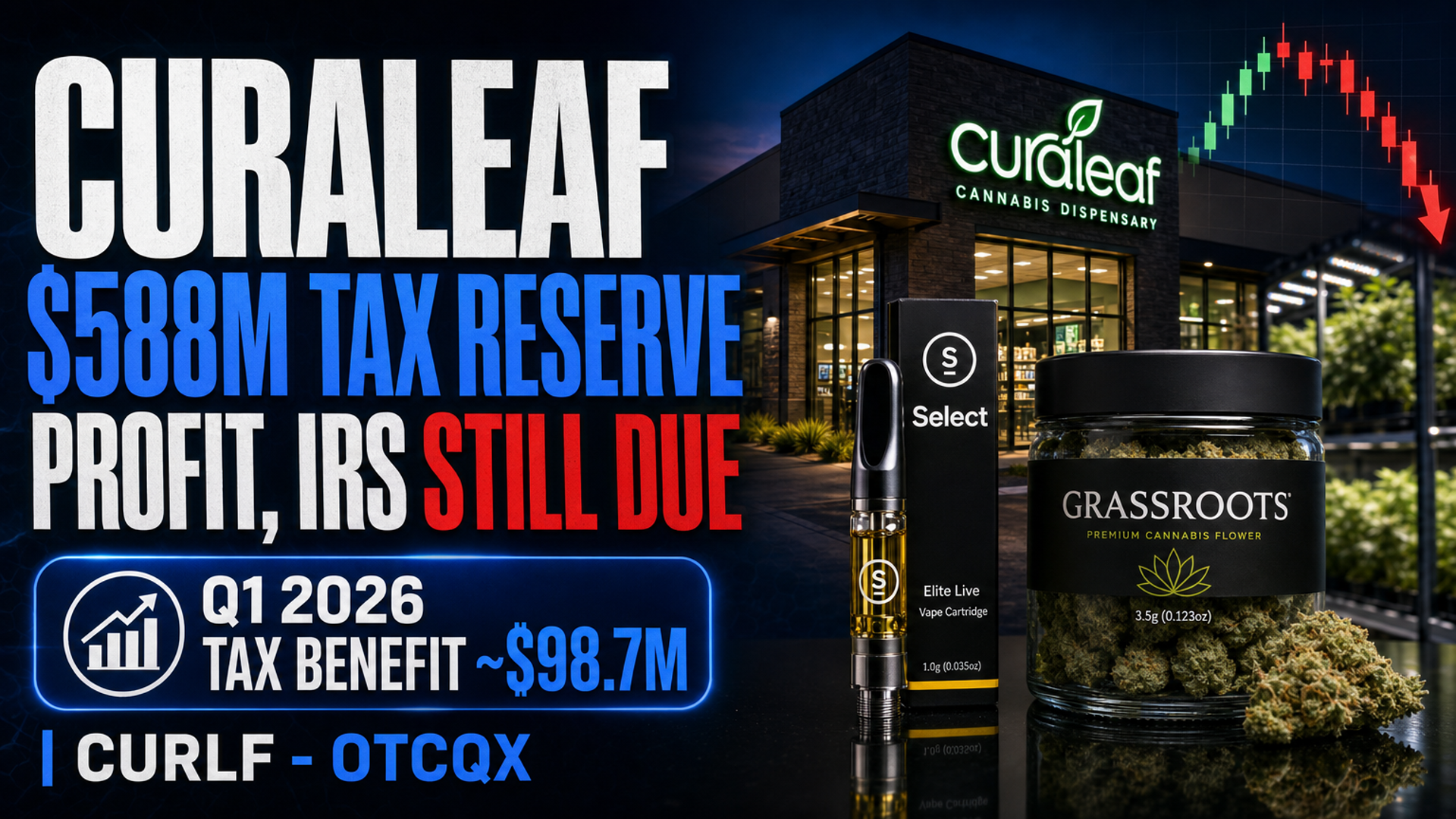
Curaleaf Just Reported Record Profit - While Losing Money | CURLF
Curaleaf, the largest US cannabis company by revenue, posted a $70M quarterly profit built on a tax accounting entry - while carrying a $588M disputed tax liability against $106M of cash. We open the SEC filing and run the 280E rescheduling math nobody on Wall Street is doing.
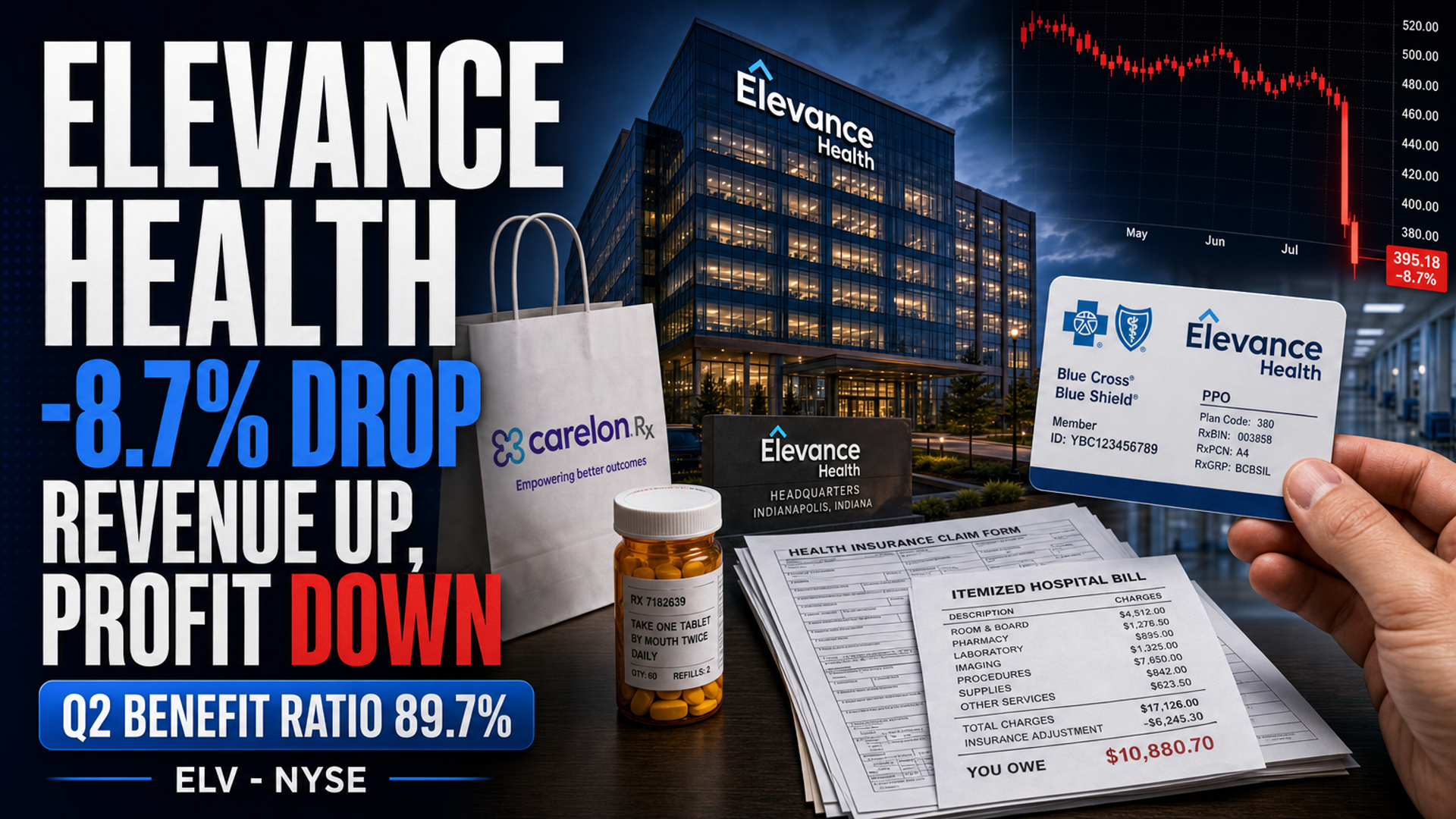
Elevance Beat Earnings by $1.24 - and Fell 9%. Here's Why.
Elevance Health (ELV) grew revenue $60B in five years while net income fell. We break down the Q2 2026 10-Q: the 89.7% benefit expense ratio, the Medicaid trough year, Carelon's growth, the closed $935M CMS matter, and what the stock is actually pricing in. Built on SEC filing data via RoboSystems.

Taxed at 94%, Now on the NYSE: Glass House Brands ($GLAS)
Glass House Brands grows cannabis for $111 a pound and just became the second US cannabis company ever to list on the NYSE. We pull its SEC filing data live: a 94% effective tax rate, a $35M 280E reserve, and the interstate-export math the market is paying 27x EBITDA for.
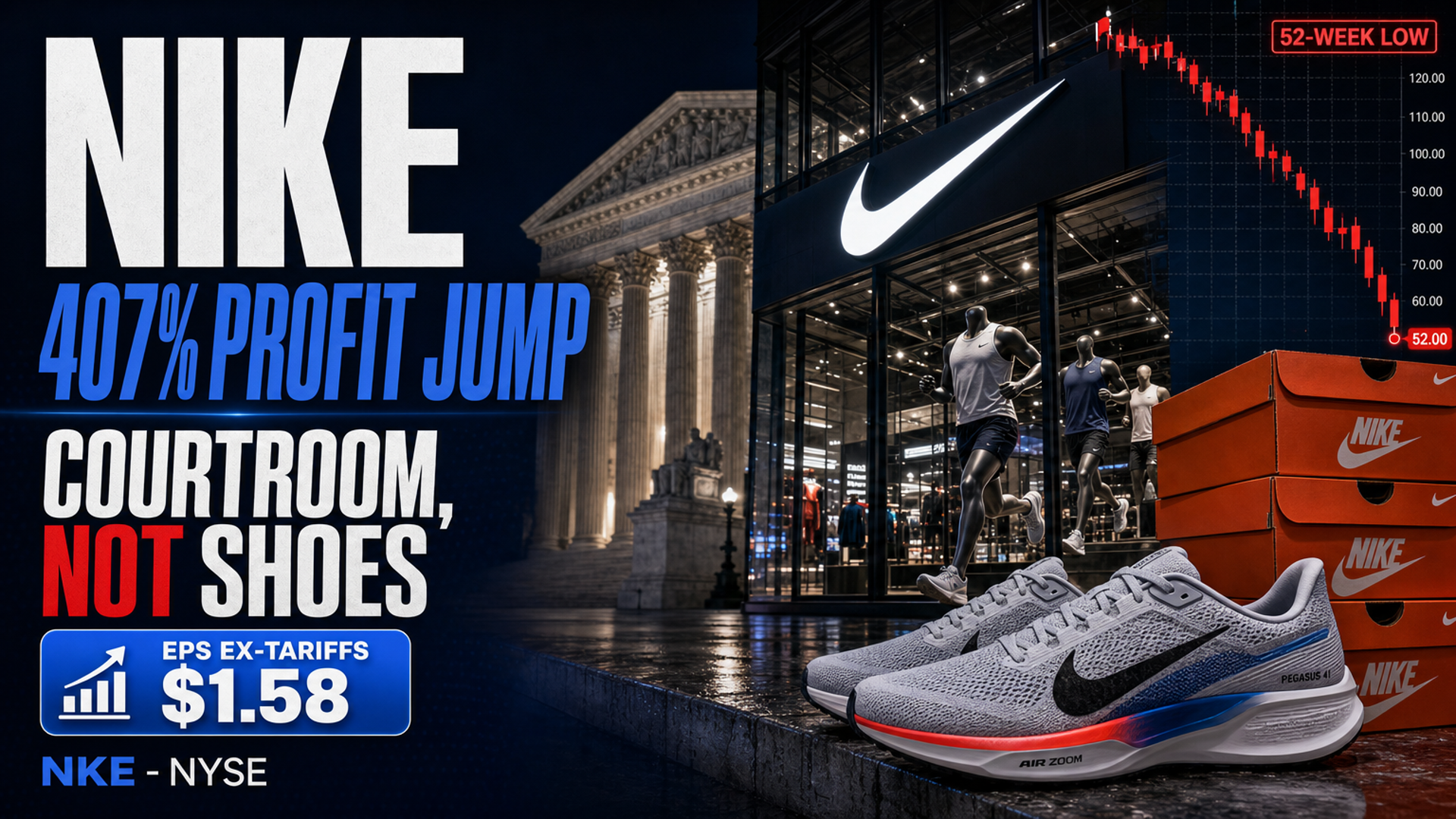
Nike's 407% Profit Jump Came From a Courtroom, Not a Shoebox
Nike's Q4 net income jumped 407% - but $986M of it came from a Supreme Court tariff ruling, not shoes. We break down the FY2026 10-K: the $5B revenue reset, the real margin picture, China and Converse, and what NKE is actually worth under bull, base, and bear assumptions.

PepsiCo at a 52-Week Low: The 4.4% Yield the Market Doesn't Trust
PepsiCo just beat on revenue, yet trades near a 52-week low with a 4.4% dividend yield. We break down the Q2 2026 filing: a two-speed company, a dividend eating 99.6% of free cash flow, Elliott's $4B stake, and a scenario DCF on what it's worth.

Jefferies' Record Quarter — and Why the Stock Fell Anyway (JEF)
Jefferies just printed the best investment banking quarter in its history — record advisory, record equities, EPS up 155% — and the stock sold off. We break down the Q2 FY2026 numbers from the SEC filings, the Point Bonita overhang, and what the stock is worth at 1.08x book.

KB Home Trades Below Book Value — Bargain or Trap? (KBH)
KB Home's stock trades at 0.90x its $61.93 book value while revenue falls 27% and margins compress. We open the SEC filings to test whether the below-book discount is a value opportunity or a value trap — margin bridge, segment data, buybacks, and a scenario valuation.
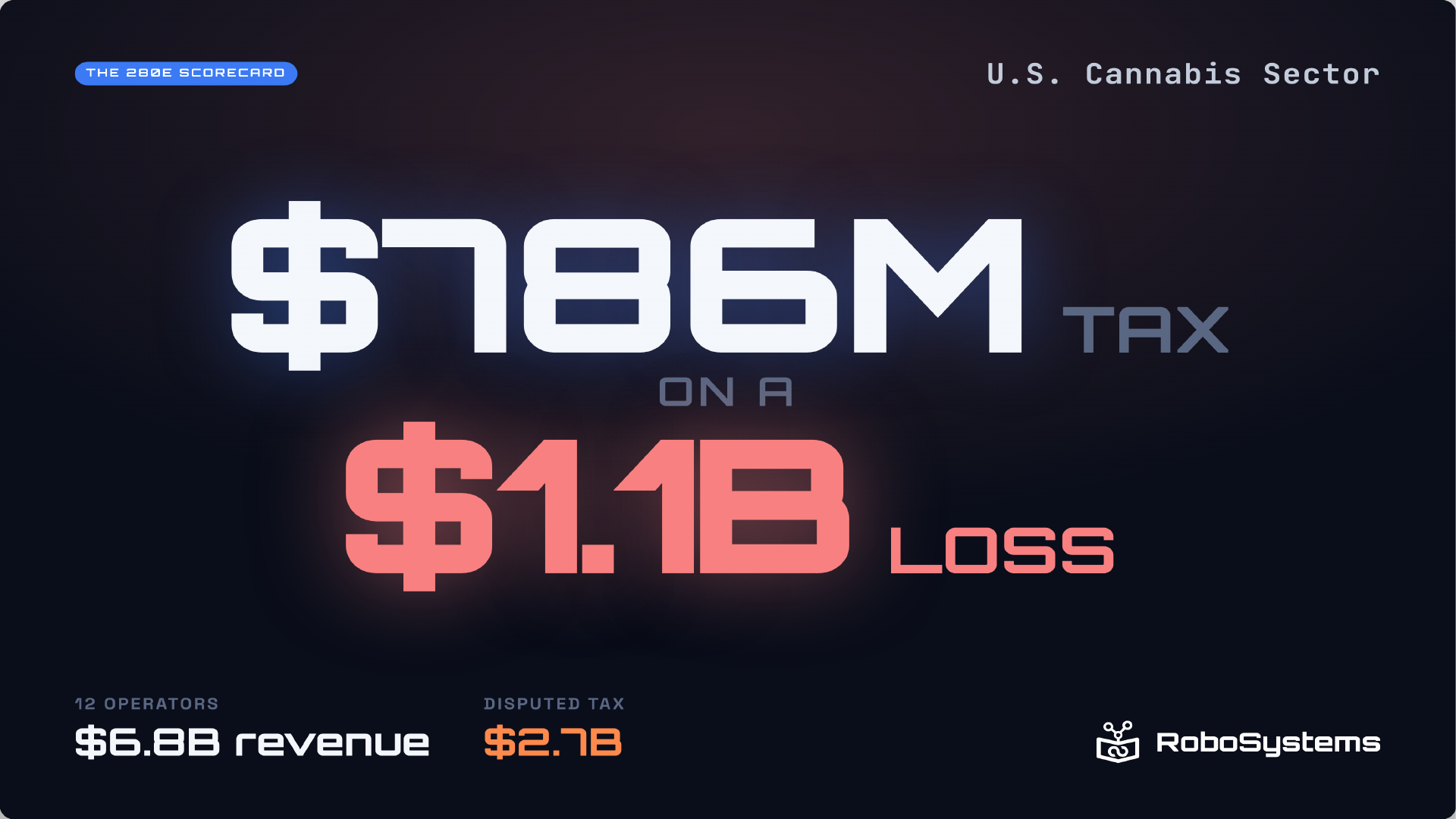
Twelve Cannabis Companies, One Tax Code: The 280E Scorecard
Twelve of the largest U.S. cannabis operators did $6.8B in revenue and $3.4B in gross profit in FY2025 — and still owed $786M in income tax on a combined pre-tax loss. A graph-built scorecard of how Section 280E taxes a healthy industry into the red, who carries the biggest disputed-tax overhang versus enterprise value, and what rescheduling would change. Nine names validated from SEC XBRL via RoboSystems; three (Curaleaf, Cresco, Glass House) added from public releases pending validation.
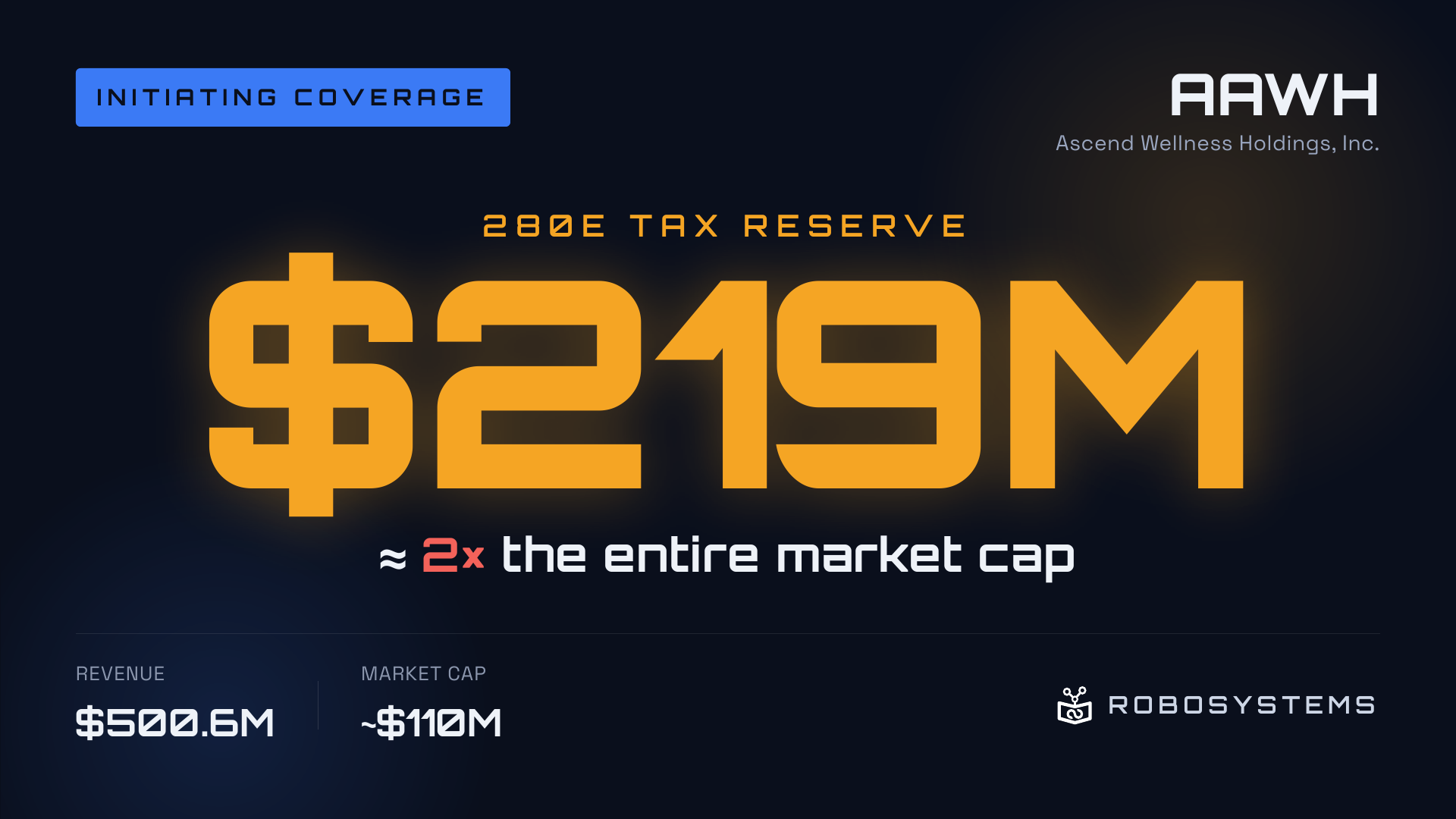
Ascend Wellness (AAWH): The Cannabis Stock That Owes More Than It's Worth
RoboSystems initiates coverage on Ascend Wellness (AAWH): a $500M cannabis operator whose 280E tax reserve is nearly 2x its market cap, sitting under $584M of debt — a binary bet on federal rescheduling. Every number pulled live from SEC filings.
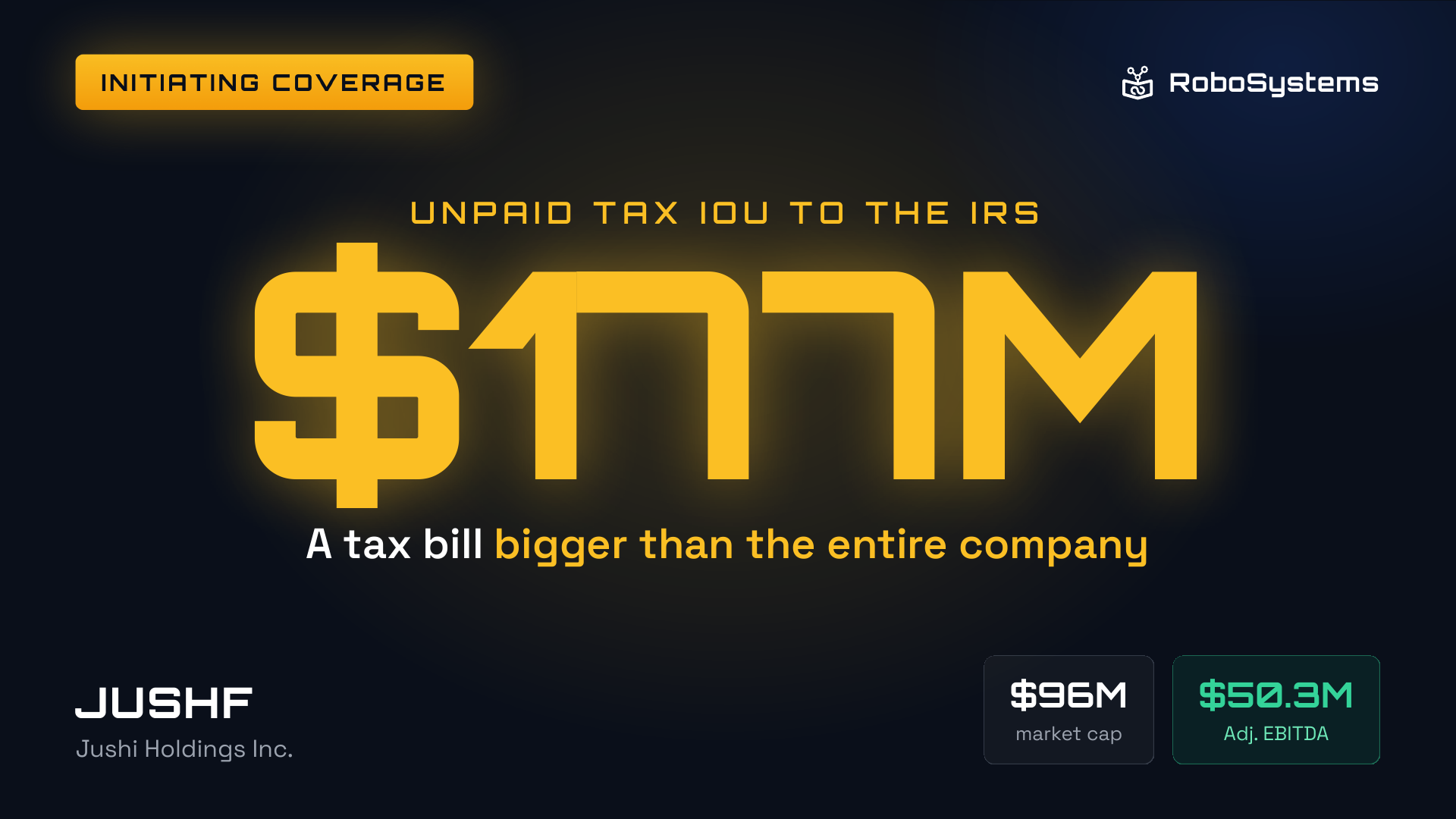
Jushi (JUSHF): A $177M Tax IOU Bigger Than the Whole Company
Initiating coverage on Jushi Holdings (JUSHF). A $263M-revenue cannabis operator that booked a $35M tax bill on a pretax loss, paid almost none of it in cash, and now carries a $177M unpaid-tax liability bigger than its market cap. The 280E paradox, the catalysts, and the valuation math.
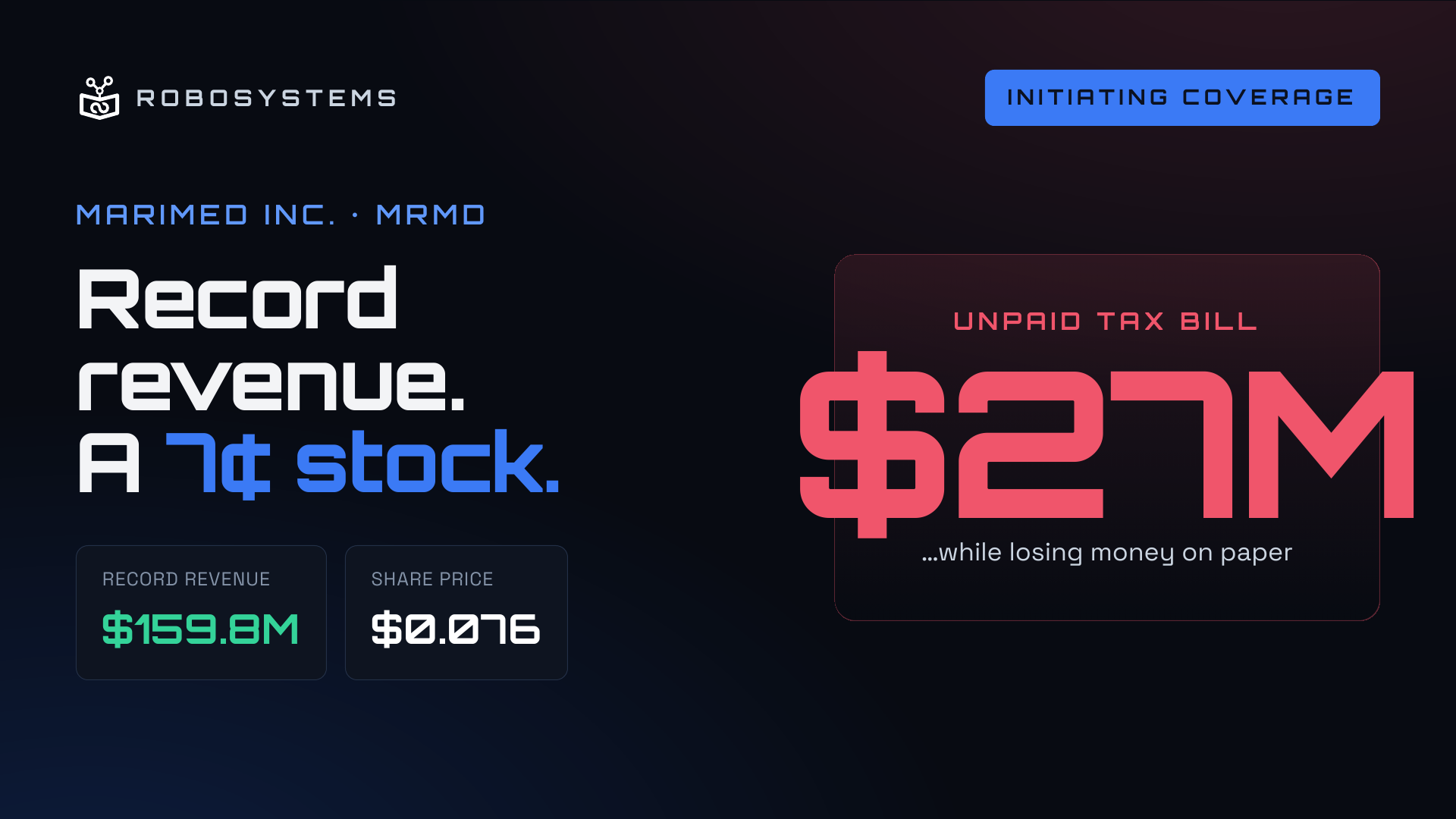
MariMed (MRMD): The $160M Brand Taxed Into a 7-Cent Stock
MariMed posted record revenue, 25 consecutive quarters of positive adjusted EBITDA, and the #1 edible in four states — yet reports a net loss and trades at 7 cents. We break down the 280E tax trap, the ~$30M unpaid tax bill (and growing) under IRS audit, and what broad rescheduling would change. Not investment advice.
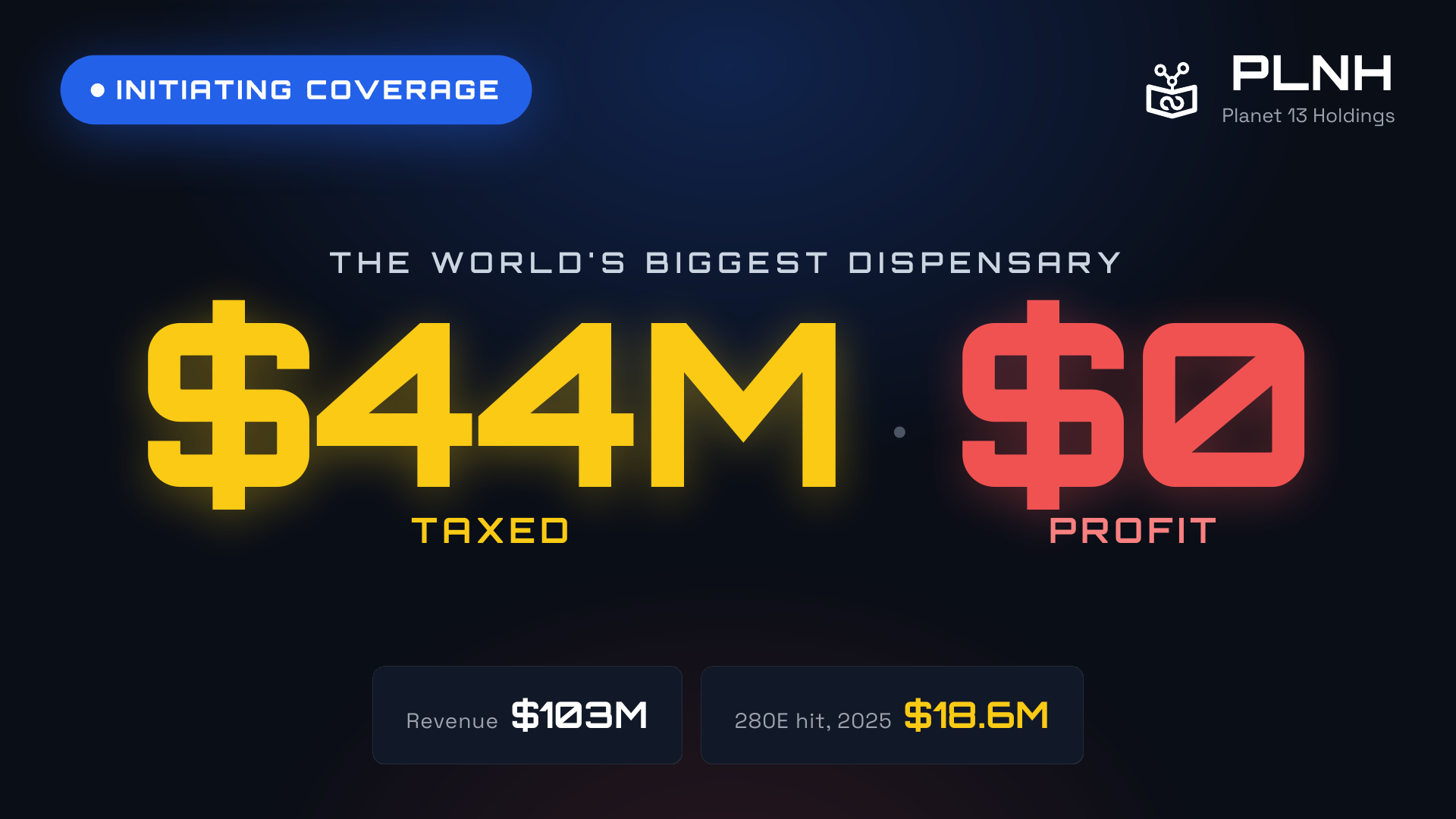
Planet 13 (PLNH): The World's Biggest Dispensary, Taxed Into a Loss
Initiating coverage on Planet 13 (PLNH): a Las Vegas cannabis microcap taxed on gross profit under 280E while losing money every year, now carrying a disputed tax reserve bigger than its market cap. We run the numbers and the catalyst math.
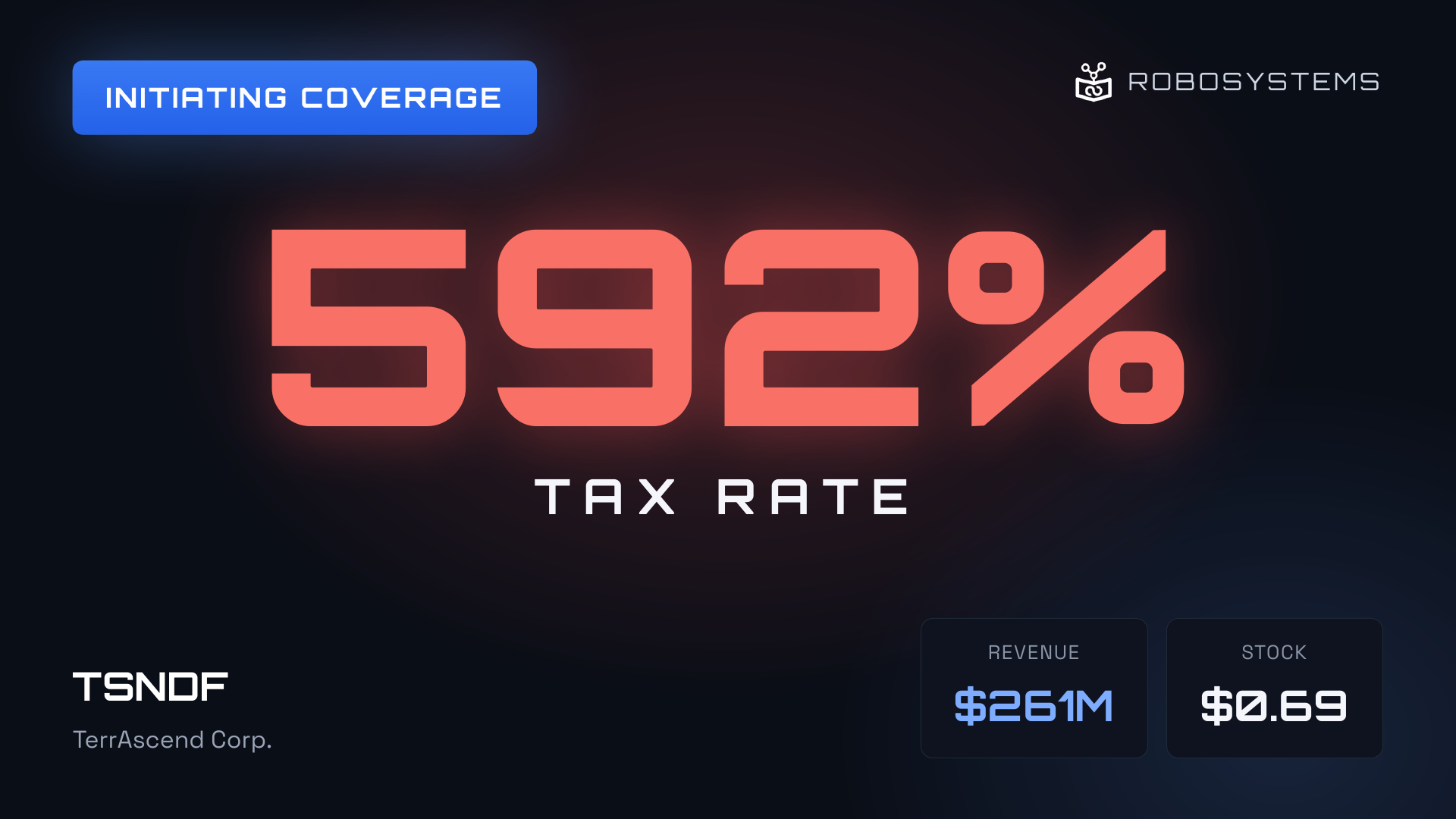
Taxed at 592%: The TerrAscend Cannabis Paradox (TSNDF)
TerrAscend earned $5M before tax and paid $29.5M in taxes — a 592% rate, courtesy of Section 280E. We break down the filings: $261M revenue, 52% margins, $68M EBITDA, a 69-cent stock, and how the math changes if rescheduling lifts the tax. Initiating coverage. Not investment advice.
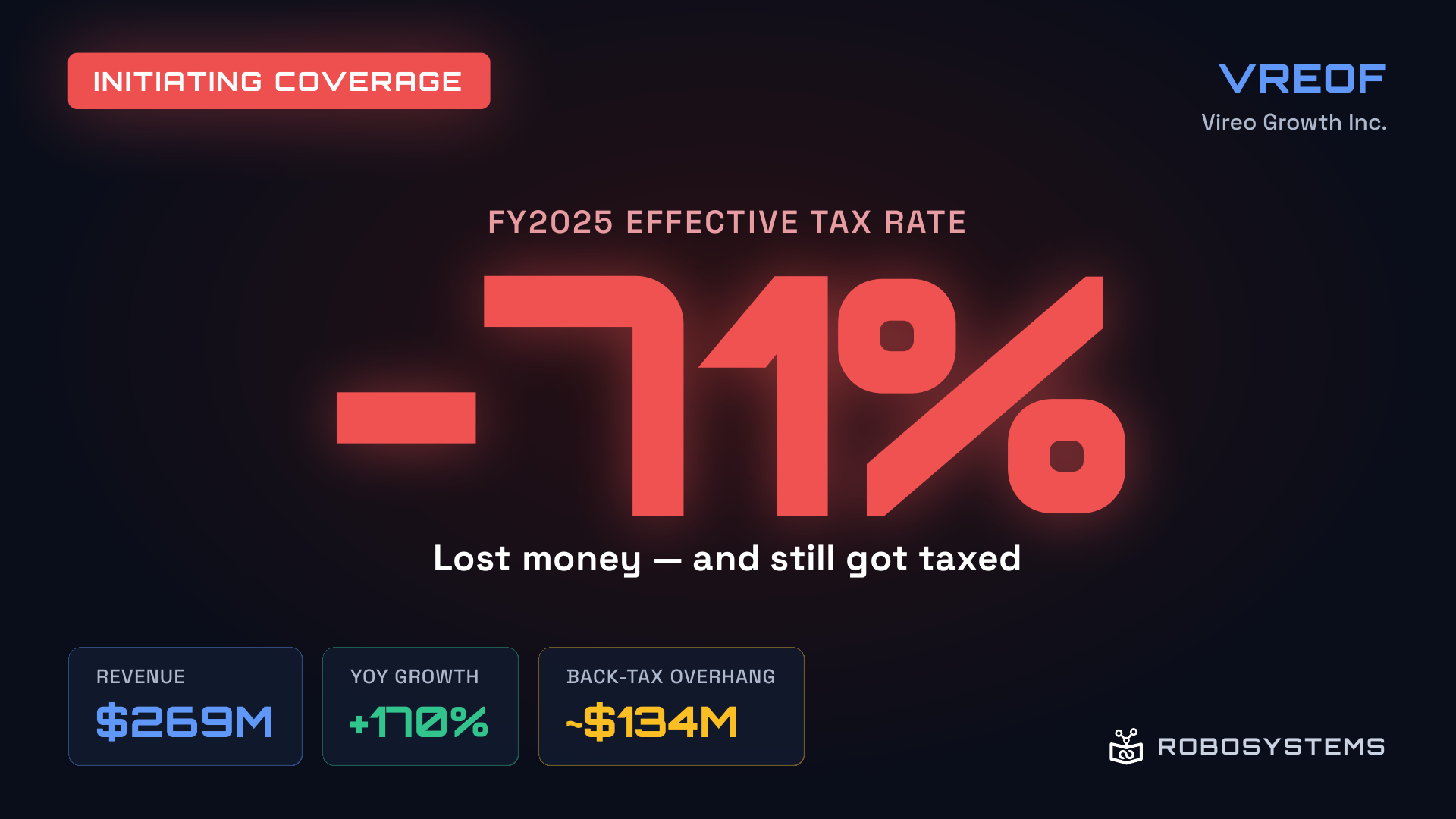
Vireo Growth (VREOF): The Cannabis Roll-Up Taxed While Losing Money
Initiating coverage on Vireo Growth (VREOF): a cannabis multi-state operator that grew revenue 170% in 2025 yet paid $28M in taxes on a $40M pretax loss. We break down the 280E paradox, the ~$134M back-tax overhang, $32.7M quarterly adjusted EBITDA, the Fluent roll-up, and what rescheduling would change. Not investment advice.
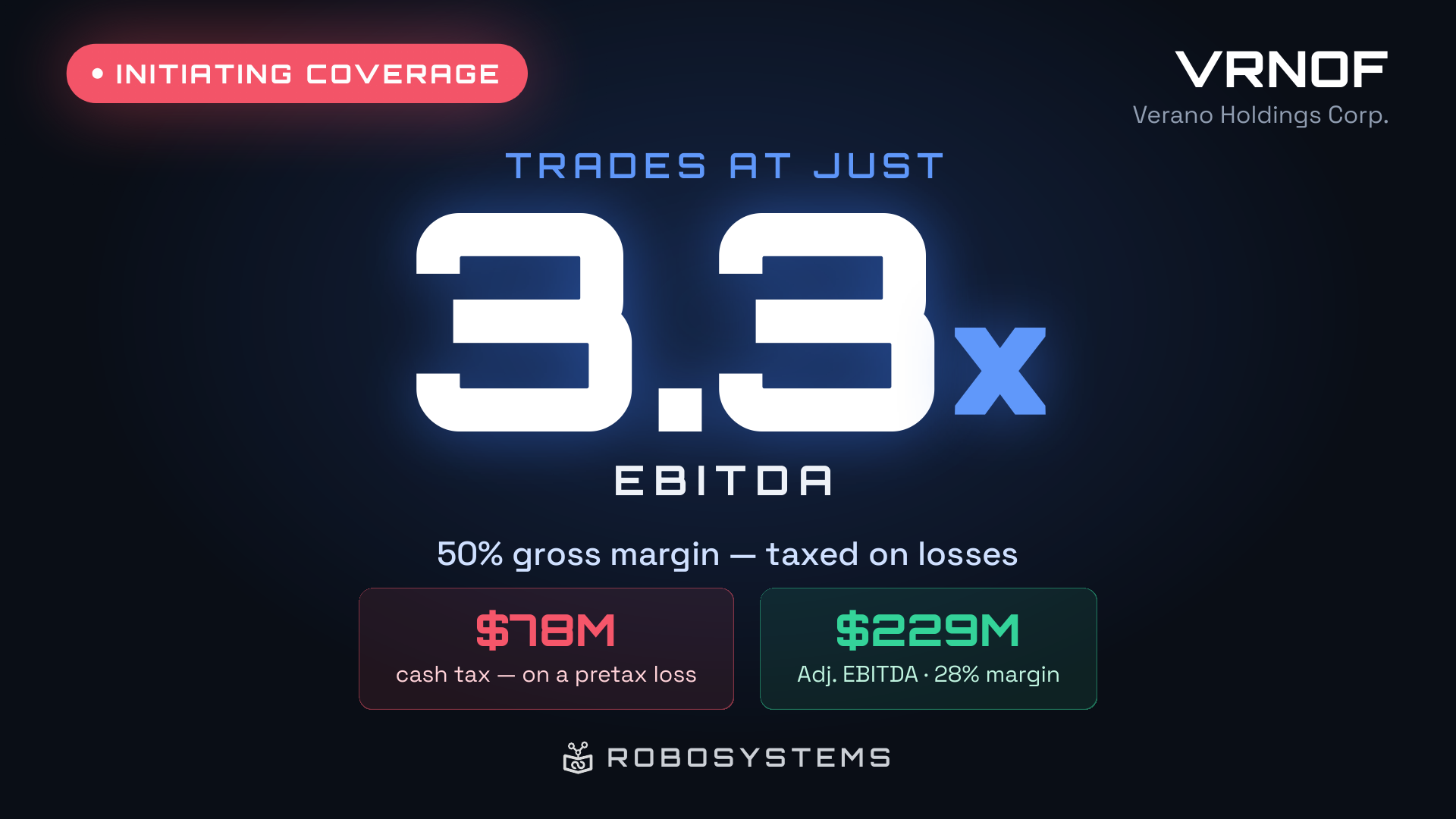
Verano: The Cannabis Giant Taxed Into a Loss (VRNOF)
Verano Holdings sold $822M of cannabis at 50% margins in 2025 and still paid $78M in cash taxes on a pretax loss. We break down Section 280E, the $391M back-tax reserve, and what rescheduling does to free cash flow. SEC filing data via RoboSystems. Not investment advice.
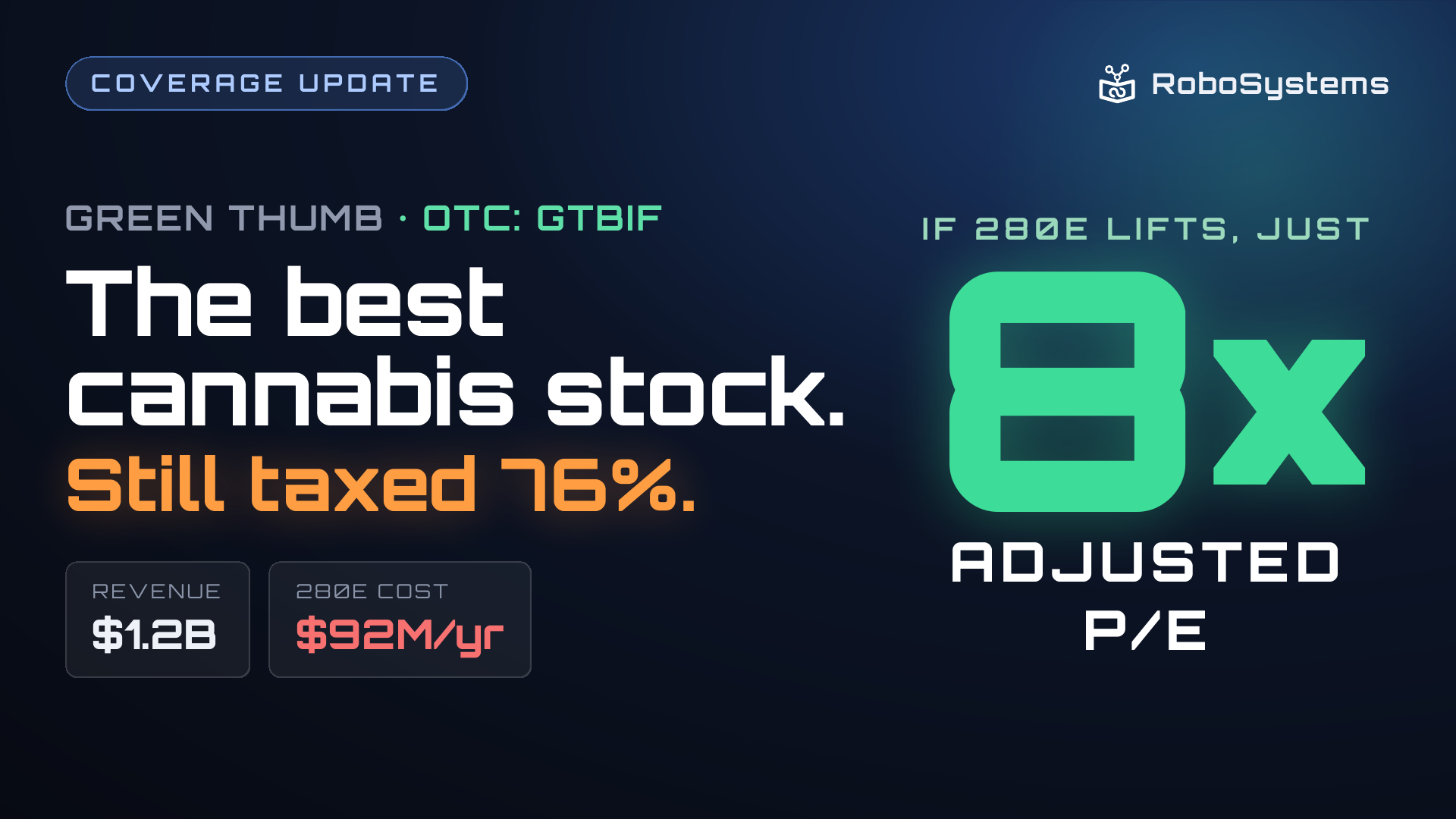
Green Thumb (GTBIF): The Best-Run MSO — and the One the Catalyst Helped Least
We covered Green Thumb at $6.67 - here's what changed. Cannabis rescheduling finally started, but the April relief is medical-only, so the most profitable MSO still paid a 76% tax rate last quarter. If broad rescheduling lands, earnings nearly double - and the stock sits at ~8x those adjusted earnings.
+1 prior report
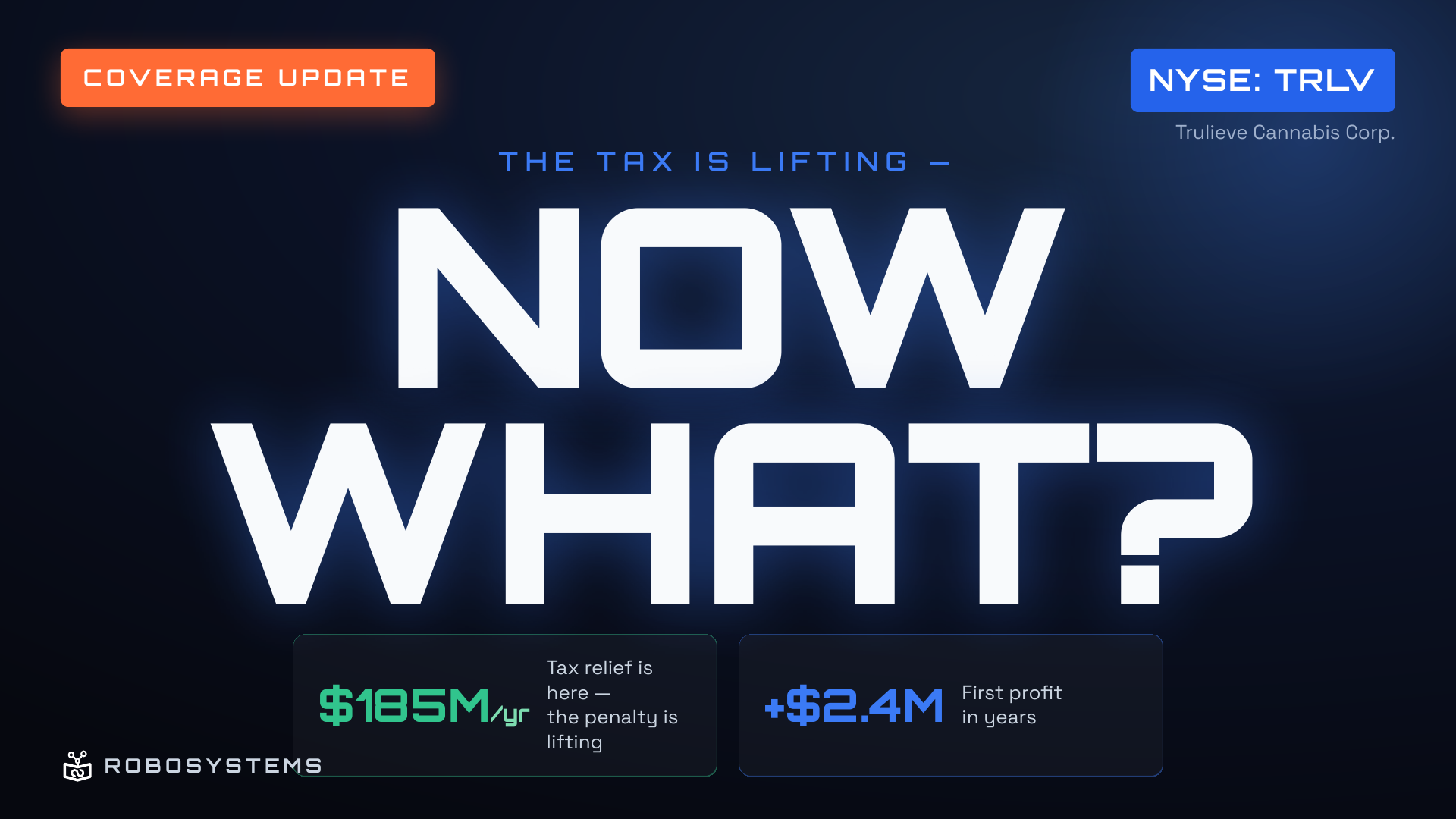
Trulieve (TRLV): A 228% Tax Rate, the NYSE, and the First Profit in Years
We first covered Trulieve in March — buried under a 228% tax rate, with the rescheduling catalyst still just a promise. The update: it's now the first U.S. cannabis company on the NYSE, its quarterly tax rate fell to 87%, and it posted its first profitable quarter in years. The real question: what does a cash machine like Trulieve do with profitability it hasn't had in years — buybacks, acquisitions, expansion? We pull the SEC filings. Continuing coverage. Not advice. No price targets.
+1 prior report